
Maximizing fat loss: a smarter approach
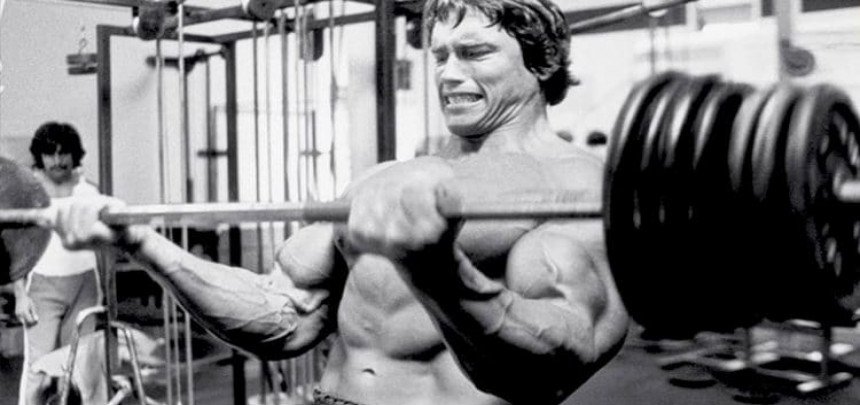
Training, Pretty much all gym enthusiasts, from the fruity spandex-wearing Stairmaster addict right up to the most badass bodybuilder in the room, happen to share something: sooner or later they’ll want to improve their look by losing some fat. Of course some value that goal more than others and are willing to go to more extreme means to reach it, but anybody who lifts weights will eventually think to himself “Hmm…I think that I’d look better if I get leaner.” Even powerlifters sometimes go there (although for some it might be a rather rare and unexpected occurrence). The thing is, and that’s where us ironheads differ from the cardio bunnies…we want to get that fat off as fast as possible while preserving or even gaining muscle mass. Granted, we all know a well designed nutritional plan will be responsible for the biggest part of our fat loss. We are also(we should at least!) aware that physical activity can contribute to speed up the process. However, what should we do about our beloved weights? How should we train when attempting to lose fat? Can we put to good use use weight training to turbocharge our fat loss efforts? DIFFERENT SCHOOLS OF THOUGHT When it comes to training strategy during a fat loss phase, there are three major schools of thought. Two are pretty smart and solid while one is downright retarded and even counterproductive. -High volume training to “cut up” muscles. If you’re familiar with my articles you probably guessed right off the bat that this is the retarded theory of lifting for fat loss. Sadly, for 95% of the population you see in gyms all around the world, this is still the prevailing notion: if you want to “get cut,” you should increase your repetitions per set. Facepalm. A trainer schooled in this “philosophy” will say something like “Do sets of 6-10 for size and 15-20 for cuts”. He obviously disregards the simple physiological fact that you cannot “define” a muscle with strength training. Doing high reps will not “add detail” or “sculpt” a goddamn thing. Simply bumping up the reps per set will do nothing but VERY slightly increase energy expenditure and burn off more muscle glycogen. This is in no way enough to speed up the fat loss process. Not only will it not help you protect your muscle mass, it may actually lead to muscle loss. In a deprived caloric state your body needs a real good reason to keep its energy-costly muscle mass. Going from a heavy lifting regimen to an easier (as far as muscle tension production goes) high reps/lighter weights approach will not force it to preserve its muscle mass. The muscle used to need its mass to move heavy shit, now you’re only asking it to move light weights so there is no need for that big engine anymore. -Lactate-inducing training There’s a direct correlation between the amount of lactate produced and the output of growth hormone. GH is a highly lypolitic (stimulates the release of fatty acids) and anti-catabolic (muscle defender) hormone. It’s also one of the reasons why 200 and 400m runners are so lean: these distances lead to a giant lactate production spanning over the whole body (a maximum 400m race has often been described as hell on earth in terms of outta this world burning). Somehow, applying this concept to weight training does have something in common with the preceding “retarded” approach: it generally relies on slightly higher rep ranges. Why? Because lactate production is at its highest in sets lasting around 50-70 seconds. So if each repetition lasts 4 seconds hitting the ideal time under tension for lactate production requires about 12-15reps per set. BUT (a huge but) the differences between this approach and the first one are that you drastically reduce the rest intervals (shoot for 30-40 seconds), normally alternate exercises for muscle groups that are “far away” from each other or antagonists (to increase overall whole-body lactate production), and don’t use too much volume per muscle group (in a typical bodybuilding “cutting program” you might do 20+ high reps sets per body part). The short rest intervals and use of multiple muscles per session jack up lactate levels, which increase GH production. So compared to the traditional “cutting” approach, this second method is FAR more effective at stimulating fat loss and preserving muscle mass. –Heavy lifting to protect muscle mass This is the philosophy adopted by many top coaches. It is now (finally!) catching up in the bodybuilding circles since more and more elite bodybuilders keep lifting as heavy as they can during their pre-contest period. We’ve all seen Ronnie’s 800lbs deadlift 2-3 weeks out from the Mr. Olympia or Johnny Jackson competing in powerlifting a few weeks prior to the Toronto pro (bodybuilding) show. Many other big names are also proponents of lifting heavy year-round to keep their muscle mass: they don’t change their training between the off-season and pre-contest periods. They let the cardio and diet drop the fat and simply lift weights to preserve muscle mass. It makes sense, too. Muscle tissue is energy-expensive and when there’s a shortage of energy (calories and nutrients) your body needs a damn good reason to keep it there! Lifting heavy weights requires a lot of muscle tension, and that needs the muscle to be strong. To keep up with the demand, your body will have no choice but to keep its muscle mass. So as you can see we have two viable options when it comes to selecting a lifting approach during our fat loss phase: lifting heavy and lifting to maximize lactate production. Another player comes into the game… This little something almost never mentioned Is called the G-Flux phenomenon. Try looking at athletes engaging in several different types of training: they’re leaner despite a pretty high caloric intake. Elite hockey players are lean and muscular despite a less than spectacular diet. I use them as an example because on average, hockey players aren’t
Maximizing fat loss: a smarter approach Read More »