
Maximizing fat loss: a smarter approach

Training, Pretty much all gym enthusiasts, from the fruity spandex-wearing Stairmaster addict right up to the most badass bodybuilder in the room, happen to share something: sooner or later they’ll want to improve their look by losing some fat. Of course some value that goal more than others and are willing to go to more extreme means to reach it, but anybody who lifts weights will eventually think to himself “Hmm…I think that I’d look better if I get leaner.” Even powerlifters sometimes go there (although for some it might be a rather rare and unexpected occurrence). The thing is, and that’s where us ironheads differ from the cardio bunnies…we want to get that fat off as fast as possible while preserving or even gaining muscle mass. Granted, we all know a well designed nutritional plan will be responsible for the biggest part of our fat loss. We are also(we should at least!) aware that physical activity can contribute to speed up the process. However, what should we do about our beloved weights? How should we train when attempting to lose fat? Can we put to good use use weight training to turbocharge our fat loss efforts? DIFFERENT SCHOOLS OF THOUGHT When it comes to training strategy during a fat loss phase, there are three major schools of thought. Two are pretty smart and solid while one is downright retarded and even counterproductive. -High volume training to “cut up” muscles. If you’re familiar with my articles you probably guessed right off the bat that this is the retarded theory of lifting for fat loss. Sadly, for 95% of the population you see in gyms all around the world, this is still the prevailing notion: if you want to “get cut,” you should increase your repetitions per set. Facepalm. A trainer schooled in this “philosophy” will say something like “Do sets of 6-10 for size and 15-20 for cuts”. He obviously disregards the simple physiological fact that you cannot “define” a muscle with strength training. Doing high reps will not “add detail” or “sculpt” a goddamn thing. Simply bumping up the reps per set will do nothing but VERY slightly increase energy expenditure and burn off more muscle glycogen. This is in no way enough to speed up the fat loss process. Not only will it not help you protect your muscle mass, it may actually lead to muscle loss. In a deprived caloric state your body needs a real good reason to keep its energy-costly muscle mass. Going from a heavy lifting regimen to an easier (as far as muscle tension production goes) high reps/lighter weights approach will not force it to preserve its muscle mass. The muscle used to need its mass to move heavy shit, now you’re only asking it to move light weights so there is no need for that big engine anymore. -Lactate-inducing training There’s a direct correlation between the amount of lactate produced and the output of growth hormone. GH is a highly lypolitic (stimulates the release of fatty acids) and anti-catabolic (muscle defender) hormone. It’s also one of the reasons why 200 and 400m runners are so lean: these distances lead to a giant lactate production spanning over the whole body (a maximum 400m race has often been described as hell on earth in terms of outta this world burning).  Somehow, applying this concept to weight training does have something in common with the preceding “retarded” approach: it generally relies on slightly higher rep ranges. Why? Because lactate production is at its highest in sets lasting around 50-70 seconds. So if each repetition lasts 4 seconds  hitting the ideal time under tension for lactate production requires about 12-15reps per set. BUT (a huge but) the differences between this approach and the first one are that you drastically reduce the rest intervals (shoot for 30-40 seconds), normally alternate exercises for muscle groups that are “far away” from each other or antagonists (to increase overall whole-body lactate production), and don’t use too much volume per muscle group (in a typical bodybuilding “cutting program” you might do 20+ high reps sets per body part). The short rest intervals and use of multiple muscles per session jack up lactate levels, which increase GH production. So compared to the traditional “cutting” approach, this second method is FAR more effective at stimulating fat loss and preserving muscle mass. –Heavy lifting to protect muscle mass This is the philosophy adopted by many top coaches. It is now (finally!) catching up in the bodybuilding circles since more and more elite bodybuilders keep lifting as heavy as they can during their pre-contest period. We’ve all seen Ronnie’s 800lbs deadlift 2-3 weeks out from the Mr. Olympia or Johnny Jackson competing in powerlifting a few weeks prior to the Toronto pro (bodybuilding) show. Many other big names are also proponents of lifting heavy year-round to keep their muscle mass: they don’t change their training between the off-season and pre-contest periods. They let the cardio and diet drop the fat and simply lift weights to preserve muscle mass. It makes sense, too. Muscle tissue is energy-expensive and when there’s a shortage of energy (calories and nutrients) your body needs a damn good reason to keep it there! Lifting heavy weights requires a lot of muscle tension, and that needs the muscle to be strong. To keep up with the demand, your body will have no choice but to keep its muscle mass. So as you can see we have two viable options when it comes to selecting a lifting approach during our fat loss phase: lifting heavy and lifting to maximize lactate production. Another player comes into the game… This little something almost never mentioned Is called the G-Flux phenomenon.  Try looking at athletes engaging in several different types of training: they’re leaner despite a pretty high caloric intake. Elite hockey players are lean and muscular despite a less than spectacular diet. I use them as an example because on average, hockey players aren’t

Maximizing fat loss: a smarter approach Read More »
Lift heavier to grow. Indefinitely?

Training, Do you add a 10-pounder to each side of the bar after every set (since you were like 16) and then holler “Hey bud, spot me”? Then it’s time to consider some new ways to step up your workout. The Path To Gainsville The vast majority of people use a single variable to progress in their weight training – load lifted. there’s nothing wrong with that, but eventually, you reach a ceiling when you simply can’t add more Weight to an exercise endlessly. in a training program, we have exercise order, exercise selection, sets, reps, tempo, rest period and load. here’s a small sample workout below. let’s go over three progression methods and see how each changes the workout. Sample Workout 1A) SQUAT – 3 SETS OF 6 REPS (3X6) WITH 90 SECONDS REST, USING 200 POUNDS 1B) DUMBBELL BENCH PRESS – 3X6 WITH 90 SECONDS REST, USING 50 POUNDS WORKOUT VOLUME (SETS X REPS X WEIGHT): SQUAT 3600 POUNDS. DUMBBELL BENCH PRESS 1800 POUNDS. TOTAL 5400 POUNDS. ASSUMING EACH SET TAKES A MINUTE, THE WORKOUT IS DONE IN 15 MINUTES. NOW MOST LIFTERS WOULD JUST INCREASE THE LOAD EACH WEEK. BUT INSTEAD, WE COULD ADD AN ADDITIONAL REP NEXT WORKOUT. OR ADD AN ADDITIONALSET. OR MAYBE WE CUT THE REST PERIOD DOWN, AND WITH THE EXTRA TIME WE CAN ADD MORE EXERCISES OR EVEN BACK-OFF SETS. OPTION #1: ADD REPS ADD ONE REP TO EACH SET OF EACH EXERCISE. 1A) SQUAT – 3X7 WITH 90 SECONDS REST, USING 200 POUNDS 1B) DUMBBELL BENCH PRESS – 3X7 WITH 90 SECONDS REST, USING 50 POUNDS WORKOUT VOLUME: SQUAT 4200 POUNDS. DUMBBELL BENCH PRESS 2100 POUNDS. TOTAL 6300 POUNDS. OPTION #2: ADD SETS ADD ONE SET TO EACH EXERCISE. 1A) SQUAT – 4X6 WITH 90 SECONDS REST, USING 200 POUNDS 1B) DUMBBELL BENCH PRESS – 4X6 WITH 90 SECONDS REST, USING 50 POUNDS WORKOUT VOLUME: SQUAT 4800 POUNDS. DUMBBELL BENCH PRESS 2400 POUNDS. TOTAL 7200 POUNDS. OPTION #3: REDUCE REST PERIODS  THE REST BETWEEN EACH SET. 1A) SQUAT – 3X6 WITH 75 SECONDS REST, USING 200 POUNDS 1B) DUMBBELL BENCH PRESS – 3X6 WITH 75 SECONDS REST, USING 50 POUNDS WORKOUT VOLUME: SQUAT 3600 POUNDS. DUMBBELL BENCH PRESS 1800 POUNDS. TOTAL 5400 POUNDS. ASSUMING EACH SET TAKES A MINUTE, THE WORKOUT IS NOW DONE IN 13.5 MINUTES. LET’S PUT IT ALL TOGETHER WEEK ONE: WORKOUT AS DESCRIBED. 3X6 WITH 90 SECONDS REST. WEEK TWO: INCREASE THE REPS ON EACH SET BY ONE. 3X7 WITH 90 SECONDS REST. WEEK THREE: MAINTAIN THE REPS, ADD ONE SET PER EXERCISE. 4X7 WITH 90 SECONDS REST. WEEK FOUR: REDUCE EACH REST PERIOD BY 15 SECONDS PER SET. 4X7 WITH 75 SECONDS REST. THIS WILL TAKE US FROM WEEK ONE’S TOTAL VOLUME OF 5400 POUNDS IN 15 MINUTES TO A TOTAL VOLUME OF 8400 POUNDS IN 18 MINUTES, WITH AN INCREASE IN WORKOUT DENSITY FROM DOING THOSE TWO EXTRA SETS. THAT’S 55% MORE WORK IN ONLY THREE MORE MINUTES, OR OVER 100 POUNDS OF Additional work per minute training. Yes, this is a ginormous progression. This is a huge increase in the total work done without having to add a single pound to the bar. So even if you’re in a situation where your home gym doesn’t have any extra weight, you can still make great progress. I haven’t even changed exercise order, exercise selection, rep tempo, or load, yet I still managed to create a much more challenging workout. Effective Ways Other Than Weightlifting to Grow Indefinitely  Weightlifting is the most effective tool to grow muscles and reach bodybuilding goals fast. However, relying solely on it might not lead to desired or indefinite growth. The reason is that each individual has a specific limit and the growth process slows down after reaching the genetic potential.  Therefore, considering some other aspects that can greatly impact the muscles’ growth is also essential to achieve the desired output.  Let’s take a look at factors apart from weightlifting to grow quickly and smoothly. Nutrition  Nutrition plays a key role in the body’s transformation process because it impacts the metabolic reaction rate of individuals. Therefore, make sure to consume essential proteins, carbohydrates, vitamins, and nutrients that can promote muscle growth and recovery.  You can ask to use essential amino acids in the form of supplements to enhance your strength and performance. Don’t forget to keep yourself hydrated.  Flexibility and mobility  Considering stretching, Yuga, or mobility exercises can also help you reach your growth goals without experiencing severe injuries and joint pain. These exercises help muscles to function smoothly and optimally which results in improved performance and better bone health.  Versatility  Weightlifting alone is not enough to reach desired goals. Therefore, incorporating various exercises, workouts, and training styles is also an effective way to grow smoothly and swiftly. They challenge your muscles differently and promote growth.  Rest and Recovery   Adequate rest or sleep and adopting recovery techniques such as stretching, foam rolling, massages, and hydration is a smart strategy for building strong and large muscles. Sleeping 7-9 hours each night also greatly aids in muscle recovery.  The Actual Take-Home Message You should now clearly see the benefits of implementing different methods of progression rather than just increasing load all the time (not to mention that going this route forever is a mere pipe dream). The key to progress is -overload- and there are different ways of getting there. just make sure you’re moving forward every step of the way.

Lift heavier to grow. Indefinitely? Read More »

“Healthy” Low Sodium Diet? Self Sabotage.

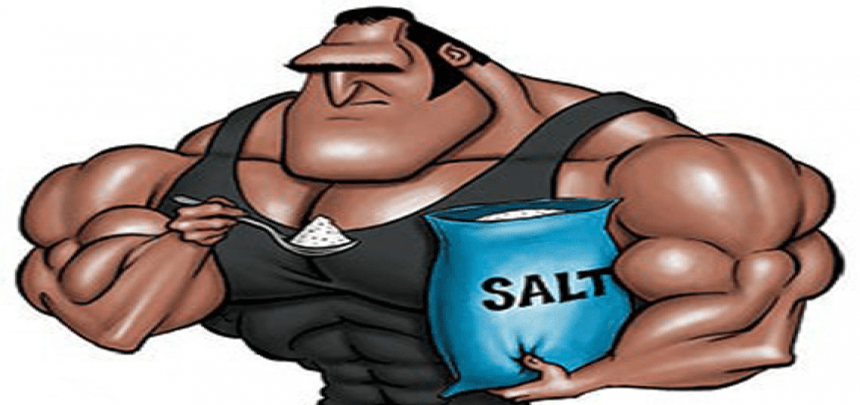
Training, Once upon a time, salt was almost priceless. The most valued of all commodities, and having a good supply of salt was as close to life insurance as you could get. Sayings like “worth its weight in salt” remind us how important salt has always been. So all the modern-day phobias surrounding salt and sodium seems to present us with a paradox: how could something so vital to survival in one era be considered so dreadful in another? Something doesn’t add up, gents. Pretty much like it happened with the low fat hysteria, the anti-sodium campaign actually began as a commercial move to sell different foods and snacks, under the guise of being healthier. As always, manufacturers care more about selling products than they do about scientific accuracy. Who would have guessed it?! As soon as the low-sodium content advertisements were shown to create dividends, other food and supplement companies followed suit, to the point where consumers started to believe that low-sodium was good, and salt, in general, was the evil. People failed to see that they had been internalizing advertising.  “We’re consumers. We are by-products of a lifestyle obsession.” -Chuck Palahniuk  For decades, manufacturers have marketed their products by bombarding the public with what ingredients their brand either does or does not have to make their product sell better than the competition’s. Like sheep, consumers followed along, buying the “low fat this” or “no sodium that” product, without asking themselves why. In regard to sodium intake, studies are coming in regularly refuting its bad reputation and negative impact on human health, performance, and physiology. Unfortunately peoples awareness does NOT grow at the same pace of scientific findings. After thousands of years, human biochemistry and physiology haven’t changed that much to be frank, so hasn’t our bodies’ need for electrolytes. Actually, the metabolic needs of high-performance athletes probably most closely resembles the needs of our ancient forefathers, especially in regard to electrolyte ingestion. A fair number of studies have concluded that unless one has a -specific and serious- condition that would preclude him from taking in salt, then salt intake will produce no negative health problems, and could actually be health promoting. As a matter of fact, only 10% of hypertension cases have a known cause, and in almost all of these cases, the cause is either genetic or stress related. For all you short attention span types out there, here is the bottom line: high-performance athletes should not avoid sodium. They should, in fact, ensure that they get ADEQUATE amounts of sodium every day to prevent negative metabolic consequences, and to promote maximum performance.  Everyone else, keep reading. Athletes eat a certain way mostly for the following reasons:   1) as a preventive measure to help stay free from illness  2) for fitness, to ensure optimum energy stores, recuperation, and restoration  3) for bodybuilders especially, to produce a cosmetic effect, i.e. a leaner, harder physique. If you’re an athlete concerned about maximizing your performance (you have no business being an athlete otherwise), you should know that a high-sodium diet fulfills all three of the above. In fact, many problems with athletic performance or sub-maximal athletic performance, even failure to improve, begin when athletes reduce or eliminate sodium from their diets. These ill effects can last for a long time. While sodium is the primary focus of this article, no nutrient acts on the metabolism by itself. Any discussion on sodium is incomplete without mentioning potassium, and the hormone aldosterone. As an electrolyte, sodium is the positively charged ion on the outside of the living cell. Electrolytes exist in an exact balance outside and inside cells, so that a shift in their balance will cause a change in order to maintain cell integrity. Simply put, sodium is responsible for regulating blood volume and blood pressure, although it serves other functions as well. During a set of high-intensity muscle contraction, blood pressure rises. This is a primary response of high-intensity training. During high-performance exercise, the metabolism of the body is better served by a higher blood volume since this translates into better oxygen and nutrient delivery to working cells. Just as importantly, a higher blood volume results in a more efficient removal of metabolic waste toxins. A low sodium intake translates into a lower blood volume, and over time this is disastrous to an athlete. Even in healthy people, low blood volume leads to a myriad of problems. A sustained low-sodium diet (and the resulting lower blood volume) is more health-threatening than the hypertension that the low-sodium diet is intended to fix! In athletes, the effects are even more obvious and profound. In a low-sodium situation, the resulting low blood volume delivers less oxygen and nutrients to working muscles, and also allows for greater accumulation of metabolic waste toxins that might not otherwise occur with a normal or higher blood volume. This results in reduced recuperation and overall weakness. It’s the last thing a hard-training athlete wants, but it’s what happens when you eliminate crucial electrolytes from your diet. A low-sodium diet makes the situation even worse in regard to optimum electrolyte metabolism, because potassium is dependent on sodium to be effective for a number of reasons. Potassium’s primary responsibilities are the regulation and control of skeletal and cardiac muscles. The vagus nerve, which controls heartbeat, is totally dependent on potassium. Potassium is the positively charged ion inside of the cell. While its independent functions in the control of muscles have been pointed out, potassium itself is dependent on sodium to maintain cell integrity: the exact balance inside and outside cell walls. How does potassium get into the muscle cell in the first place? Sodium delivers it! The cell wall is partially permeable to sodium. It takes three molecules of sodium to get one molecule of potassium inside the cell, through a process called “active transport.” Potassium simply can’t get into the cell without sodium. Therefore, for optimum cell integrity and optimum potassium delivery, there must be ample sodium present.

“Healthy” Low Sodium Diet? Self Sabotage. Read More »

INJURIES: a practical guide. In the kitchen.

Training, Do your part! The infamous trifecta. Rest, ice, and NSAIDs. If you’ve got any sportsinjury, you’re likely going to leave the doc’s officewith always the same old, blanket and trite prescription. Rest, ice, and NSAIDs. You’re definitely unlikely to hear about the healingbenefits of curry powder, garlic, pineapple, cocoa, tea, andblueberries. Nor will you be ever advised to increase your vitamin A,vitamin C, copper, or zinc intake. You certainly won’t walk away with a prescription for fish oil. And you surely won’t hear a single word about increasing the protein content of your diet. Shame. Maybe it’s because your doc thinks this is too much toremember. Or, most likely, your doc isn’t up on the latest nutritional research. Regardless of the reason, it’s a shame as nutrition plays a VERY important role in injury repair. From boosting immune function, to improved collagen deposition, toa more rapid return to function, the right nutritional intake canmake all the difference in this world. ALL CAPITALIZED:DOES IT COUNTERACT YOUR ATTENTION DEFICIT DISORDER? ? NUTRITION AND INJURY REPAIRWE MAY PERCEIVE INJURY AS  A CHAOTIC EVENT — WITH THEPAIN, SWELLING, AND DYSFUNCTION — BUT WHEN WE LOOK AT THINGS BIOLOGICALLY WE SEE THAT INJURY DOES LEADTO A WELL ORGANIZED, CONSISTENT PATTERN OF REPAIR. RESEARCHERS TYPICALLY BREAK THIS PATTERN DOWN INTO 3 DEFINED PHASES. PHASE 1 — INFLAMMATIONTHIS STAGE LASTS UP TO 4-5 DAYS POST SOFT TISSUE INJURY (2-3WEEKS IN BONE INJURY) AND IS IN PLACE TO CLEAR OUT INJURED TISSUEDEBRIS. PHASE 2 — PROLIFERATIONTHIS STAGE COMES AFTER INFLAMMATION AND LASTS ABOUT 2-3 WEEKS(10-12 WEEKS IN BONE INJURY) AND IS IN PLACE TO FORM TEMPORARYREPLACEMENT TISSUES. THESE TISSUES ARE USUALLY WEAKER THANTHE ORIGINALLY INJURED TISSUES YET STILL PROVIDE SOME STRUCTURE ANDFUNCTION TO THE SITE OF INJURY. A FUNCTIONAL TEMPORARY CRUTCH. PHASE 3 – REMODELINGTHIS STAGE COMES AFTER PROLIFERATION AND CAN LAST UP TO 1-2YEARS (EVEN LONGER IN BONE INJURY) AND IS IN PLACE TO FORM NEWTISSUES AS STRONG AS POSSIBLE AS THE ORIGINAL TISSUES. WE CAN LOOK AT EACH STEP IN THE REPAIR PROCESS, TARGETINGDIFFERENT NUTRITIONAL ANGLES IN THE SUPPORT OF INJURYRECOVERY. THESE TARGETS TYPICALLY FALL INTO THE FOLLOWINGTHREE CATEGORIES: A) NUTRITIONAL STRATEGIES THAT PROMOTE, YET MANAGE, ACUTEINFLAMMATION(CONTRADICTORY? NOT REALLY, KEEP ON READING) B) NUTRITIONAL STRATEGIES FOR SUPPORTING IMMUNEFUNCTION (GENERALLY UNDERRATED ROLE IN INJURIES HEALING) C) NUTRITIONAL STRATEGIES THAT SUPPORT PERMANENT TISSUE HEALINGAND REGENERATION. INFLAMMATION IS THE MOST ACUTE AND PROBLEMATIC PHASE, SO AMAJOR GOAL OF ANY INJURY HEALING PROTOCOL SHOULD BE TO SUPPORT (BUT MANAGE) THE INFLAMMATORY PROCESS. MOST PEOPLE THINKINFLAMMATION IS INTRINSICALLY A BAD THING, YET IT’S IMPORTANT TO KNOW THAT THE INFLAMMATORY PROCESS IS CRITICAL AND THAT ANY STRATEGY DESIGNED TO SUPPRESS INFLAMMATION OR BLOOD FLOW TO THE INJURED AREA SHOULD BE AVOIDED. HOWEVER, PRO-INFLAMMATORY AGENTS SHOULD ALSO BE AVOIDED AS EXCESSIVE INFLAMMATION COULD INCREASE TOTAL TISSUE DAMAGE, SLOWING DOWN THE REPAIR PROCESS. A MATTER OF BALANCE, AS BASICALLY EVERYTIME. ALSO, ANOTHER GOAL OF MANAGING INFLAMMATION SHOULD BE TO REDUCEPAIN, AS PAIN CAN CAUSE BIOMECHANICAL DISFUNCTIONAL COMPENSATIONS THAT CAN LEAD TO SECONDARY INJURY AS WELL AS RESTRICT MOVEMENT NECESSARY FOR THE DEVELOPMENT OF STRONG, FUNCTIONALLY ADAPTED REPLACEMENT TISSUES. HOWEVER, ONCE AGAIN, STRATEGIES THAT SUPPRESS PAIN OFTEN TARGET INFLAMMATION (THE AWFULLY ABUSED NSAIDS) AND IN THIS CASE, THE ELIMINATION OF INFLAMMATION (AND PAIN) MAY ALSO IMPAIR HEALING.ONCE WE’VE ESTABILISHED ALL THIS, IT’S TIME TO THINK ABOUT HOWSPECIFIC MACRONUTRIENT AND MICRONUTRIENT INTERVENTIONS CAN HELPMANAGE INFLAMMATION, BOOST IMMUNE FUNCTION, AND HELP LAY DOWNSTRONGER REPLACEMENT TISSUES MORE QUICKLY. DIETARY FATS AND INFLAMMATIONDIETS HIGH IN TRANS-FATS, OMEGA 6 RICH VEGETABLE OILS, ANDSATURATED FAT ARE PRO-INFLAMMATORY WHILE A DIET HIGH INMONOUNSATURATED FATS AND OMEGA 3 FATS IS ANTI-INFLAMMATORY. MOST OF US SHOULD ALREADY KNOW THAT IT’S THE RATIO OF OMEGA 6 TO OMEGA 3 IN THE DIET THAT HELPS US MAINTAIN A BALANCED INFLAMMATORY PROFILE, BUT THIS REFRESHER LESSON IS OFTEN NEEDED DURING PERIODS OF INJURY REPAIR.ONE MORE REQUIRED REFRESHER IS THAT BEYOND 3S AND 6S,THE OVERALL FAT BALANCE IS IMPORTANT HERE. WITH A GOOD BALANCE OFSATURATED, MONOUNSATURATED, AND POLYUNSATURATED FATS (ABOUT 1/3 OFTOTAL CALORIC INTAKE EACH), THE BODY’S INFLAMMATORY PROFILE WILLLIKELY FALL RIGHT INTO LINE — ESPECIALLY DURING PERIODS OF INJURY REPAIR. THE FOLLOWING QUITE SIMPLE STRATEGIES SHOULD GO A LONGWAY DURING INJURY REPAIR AND EVEN FOR INJURY PREVENTION: BALANCE YOUR DIETARY FATS:UP YOUR INTAKE OF EXTRA VIRGIN OLIVE OIL, MIXED NUTS, AVOCADOS, FLAX OIL, GROUND FLAX, AND OTHER SEEDS, MAKING SURE TO GET SOME OF EACH FAT SOURCE EVERY DAY. BY EATING THESE FOODS, YOU’LL LIKELY BALANCE OUT THE SATURATED FATS NATURALLY PRESENT IN YOUR PROTEIN SxOURCES LIKE RED MEAT, LEADING TO A HEALTHY PROFILE WITHOUT BREAKING OUT THECALCULATOR. BALANCE YOUR 6:3 RATIO:USE 5-10 GRAMS OF FISH OIL EACH DAY WHILE REDUCING OMEGA 6 FATS LIKEVEGETABLE OILS SUCH AS CORN OIL, SUNFLOWER OIL, SAFFLOWER OIL,COTTONSEED OIL, AND SOYBEAN OIL. THIS WILL TAKECARE OF YOUR OMEGA 6:3 RATIO. START USING SPICES AND PHYTONUTRIENTS TO MANAGE INFLAMMATIONBESIDES HEALTHY FAT BALANCE, CERTAIN FOODS AND HERBS CAN BE VERYBENEFICIAL IN THE MANAGEMENT OF INFLAMMATION. THESE INCLUDE: TURMERICITS ACTIVE INGREDIENT, CURCUMIN, IS RESPONSIBLE FOR THE ANTI-INFLAMMATORY BENEFITS OF TURMERIC.AS TURMERIC IS PRESENT IN CURRY POWDER, YOU COULD START BY ADDINGCURRY TO YOUR DISHES FOR FLAVOR, ALTHOUGH A BETTER STRATEGY WOULD BE TO ADD 400-600MG OF STRAIGHT TURMERIC EXTRACT 3X PER DAY TO MANAGE INFLAMMATION, WITH 5-10 MG OF PIPERINE (MOST SUPPLEMENTS ARE ALREADY PRE-MIXED) GOOD OLD STINKY GARLIC GARLIC HAS BEEN SHOWN TO INHIBIT CERTAIN INFLAMMATORY ENZYMES AND IMPACT MACROPHAGE FUNCTION. AGAIN, ALTHOUGH EATING MORE GARLIC IS A GOOD START IF YOU ENJOY ITS TASTE (OR ARE GREEK) SUPPLEMENTING WITH 600-1200MG OF AGED EXTRACT LIKELY WORKS BEST. PINEAPPLE(BROMELAIN) THIS IS ANOTHER ANTI-INFLAMMATORY PLANT EXTRACT THAT COMES FROMPINEAPPLE. WHILE BEST KNOWN FOR ITS DIGESTIVE PROPERTIES,IT’S BOTH AN ANTI-INFLAMMATORY AND ANALGESIC. DOSES OF500-1000MG/DAY SHOULD DO THE TRICK. FOR THIS PURPOSE, BEST IF TAKEN ON EMPTY STOMACH. BOSWELLIA SERRATA THIS PLANT EXTRACT ALSO HAS ANALGESIC PROPERTIES AND ISUSUALLY TAKEN IN 300MG DOSES 3X PER DAY TO AMELIORATE PAIN WITHOUT IMPAIRING THE NECESSARY INFLAMMATORY PROCESS. BLACK AND GREEN TEA, COCOA, RED WINE, AND CERTAIN FRUITS AND VEGGIES

INJURIES: a practical guide. In the kitchen. Read More »

Leaner in 20 minutes. While doing NOTHING.

Training, It all started when on an unexpectedly busy day I broke the mandatory rule of muscle-building, turtle shell abs nutrition: went waaay too long between meals. I actually only had breakfast and it was almost 2PM. What the… Trying not to drool too visibly, I pulled into the first Chinese buffet I came across. So I piled up a plate and began stuffing my face. Then I piled up another plate. And then a third one… Nothing really out of the ordinary, you may rightfully say. BUT. Just before I dove into the third plate, my phone rang. The conversation went on for quite a bit. So, I hung up and looked down at my plate. I was full. Not just full, but fully padded. I couldn’t eat another bite, yet a few minutes earlier, before the phone call, I felt still hungry and planning to gobble down that third plate with no mercy. What kind of sorcery took place all of a sudden? Here the explanation can be simple or complex (what did you say? Ok, let’s stick to simple…)  We don’t have immediate feedback from our bodies telling us we’ve eaten enough. It takes about 20 minutes for food to be digested enough that nutrients gets into the bloodstream and the hormones start working. Said hormones — insulin, leptin, cortisol, and ghrelin — act as chemical messengers that run signals related to hunger and satiety between the stomach and the brain. Problem is, if you bomb the stomach too quickly, your body basically doesn’t have time to “receive the messages”. This is why if you eat very fast until you’re full, you often feel nauseatingly stuffed 20 minutes after the meal. You were actually full halfway into your meal; you just didn’t know it. Alrite, so we have some slow body signals to deal with. Not that big of a deal, right? But there’s another factor here: We still have the base physiologies of prehistoric man. Our slowly evolving bodies aren’t made for a world of abundant, calorically-dense foods… or Chinese buffets. Our bodies (and for the most part our brains too) are still swinging between tree branches and dragging women into the cave by their hair (for Paleo dieters: don’t take this as an excuse. It’s NOT). This means that when we see hot, abundant food, we think “YAY! fresh kill!” and have the innate desire to gorge on it, just like our pre-agriculture, pre-refrigerator ancestors did. They’d graze on vegetation and have small “snacks” until they killed a big animal, then they’d gorge. Thing is, today’s “grazing” involves vending machine candy bars, and modern “kill gorging” usually takes place at McDonald’s drive-thru. Now combine these two elements and what do you get? A huge swim ring of fat around your waist. And no, it ain’t even good to help you floating, quite the opposite. The aforementioned perfect storm makes us into fatties and can wreck our attempts at dieting. When we’re ready to get ripped, most of us have to do battle with slow hormones, primitive desires, and a world full of cheap, fattening, tasty food calling our name. Tip #1: Manipulate the 20-Minute Phenomenon You need to stop eating before you get full, or at the very least at the first sign of fullness. Twenty minutes later, you’ll actually feel full. This takes practice and discipline. It’s just not easy for a big weight-training male to walk away from available food when he’s not yet stuffed. In many ways, it goes against our instincts. So when you’re dieting and trying to reduce calories: • Keep a food log. This sounds obvious yet many people “diet” without ever tracking their calories and macronutrients. Sorry, but just buying packaged foods marked “low-fat” does not count as a “diet”. As tedious as it is, you need to count calories and macronutrients at least once in your life in order to see the big picture. For example, I’ve known dozens of gym “vets” who went for years with suboptimal gains. When they finally tracked their protein intake, they realized they were getting just about enough to support the lean mass of a 13 Y/O anorexic girl scout. So, let’s say your diet calls for 2500 calories per day. Divide that by five meals and you get 500 calories per feeding. You do the deed: You read labels, you weigh and measure food, you consult online calorie guides, you write it all down. A blind monkey can do that, you can too, most likely. Awful stuff, I know. But now you have a reason to stop eating: You’ve consumed your 500 calories. (More importantly, you now know what 500 calories looks like!) Walk away. You will likely not feel “full,” but you will in about 20 minutes. • Learn to eat slower. Put down your fork between bites, just like mama taught you. Because she did, right? ? • Try using a small salad fork instead of that shovel you’re using now. Use smaller plates too when dieting. Basically, if it’s on your plate, you’ll finish it, even after you’re full. A few years ago, some researchers  conducted a study where participants ate from soup bowls equipped with hidden refilling devices. Subjects who ate from these never-ending bowls consumed 73% more than those who ate from regular bowls. But here’s the kicker: They didn’t rate their feelings of satiety any higher than those who consumed less. You’ve heard the saying “You eat with your eyes first.” It’s pretty much true. • Make your plate and sit at the table. No eating from containers in the kitchen. • No eating in front of the TV. Studies actually show you eat more when your mind is distracted by television. Same goes with the friggin’ social media on any device of course. • Chew your food more, goddamnit!!! • Anddddd the obvious: Never get starved to begin with. Eating every three hours or so should prevent this. Go too long between

Leaner in 20 minutes. While doing NOTHING. Read More »

Booze & Anabolism?

Nutrition, Drinking has two faces, kind of a yin and yang matter. In reasonable, low doses it has potential health benefits. At the opposite end of the spectrum, it makes you crash your (was it yours?) car into a tree at 70 mph and relieve yourself in the swimming pool of your neighbours wearing nothing but a smile. But I guess the key question on your mind is how much you can get away with booze before NASA schedules its first robotic exploration of your belly. Drinking = Fat? Trust me, this is not the easiest question to answer. Alcohol (more properly known as ethanol) is technically a macronutrient like carbs, protein, and fat, with seven calories per gram. On paper, where there are calories, there should be usable energy…and this is where sh*it gets tricky. Alcohol is certainly not an essential nutrient; the body doesn’t need it for growth and survival (or anything else actually) and, unlike cars with internal combustion engines, you just can’t use ethanol for fuel. The human body perceives it as a toxin and fights to get rid of it once ingested. This is why it has a higher thermic effect than other macros (it takes more calories to process than carbs, fat, or even protein). A pretty well-designed study found that men consuming an average of four beers per day took in about 15% more calories than a matched group of non-drinkers. The two groups had identical amounts of physical activity. So, logically, you’d think that the drinkers packed on some pounds. Yet, they did not. Both groups had the same body-mass index, in spite of all those extra calories for the drinkers. Then maybe alcohol has an incognito life as a fat-burning aid masquerading as an addictive vice. Meh, doubtfully. Nobody’s ever measured what would happen if you matched up two groups of drinkers and non-drinkers, consuming an equal number of total calories, and followed them over the long run. Another study compared two weight-loss diets (1,500 calories per day, in other words my mid-afternoon snack). Subjects on the first diet got 10 percent of their total calories from wine – 150 calories, or just over a glass per day. The second group got 10 percent from grape juice. After three months, the wine group lost almost a kilogram (or 2.2 pounds) more total body weight, although the difference wasn’t statistically significant. The main issue with said data is that not a single word had been spent about body composition. They lost one extra kilogram of…? While alcohol stimulates more calorie expenditure, it also suppresses the oxidation of dietary fat (you burn more overall calories but less fat). A recent line of research suggests that alcohol activates AMPk, a metabolism-regulating enzyme, that helps you lose fat by increasing insulin sensitivity. Mere speculation so far, don’t count on it. Alcohol  Muscle Mass & Testosterone Does alcohol melt away muscle mass? It definitely can, but you really have to drink lots. Most of the research on alcohol’s effect on muscle protein metabolism is on alcoholics who chronically consume more than 100 grams of ethanol – no less than eight medium beers – per day. Two-thirds of these drunks end up with “alcohol myopathy,” a condition characterised by muscle weakness and atrophy. The daily high alcohol intake impairs essential nutrient absorption and hastens myofibrillar degeneration, but casual drinkers aren’t likely to lose their beloved muscle mass. Another study looked into the acute effect of alcohol intoxication on post-exercise hormonal response, using trained lifters as subjects. After their workout, half the subjects were given the equivalent of five drinks. The researchers then monitored all the subjects’ hormone levels for the next five hours. No differences were seen in Testosterone and other related hormones in either group. Cortisol was elevated in the ethanol group, but only for a short time frame. Anecdotally, I know several bodybuilders who average two or three drinks a day and continue to get stronger and pack on muscle tissue. One of the most jacked and ripped guys I know used to drink half a bottle of red wine every night. (Compared to the rest of the stuff he’s on, he probably considers it very healthy). Could they make even better gains without the bottle? They might, maybe, but moderate alcohol consumption, or the absence of alcohol, have very little effect on the many variables that determine size and strength. Alcohol & Exercise Performance  If it’s difficult to get approval for a study in which athletes get drunk after a workout, imagine how hard it would be to get a green light when lifters or runners get drunk BEFORE. Yet, believe it or not, it has been done! Subjects were given the equivalent of about six drinks and then tested for strength and endurance. Actually, they were tested before, during, and 24 and 48 hours after ingesting the alcohol. Contrary to what the researchers expected, the alcohol had no observable effect on any of the strength tests. Additionally, there was no increase in creatine kinase, an indicator of muscle damage. In a similar study, the equivalent of about five drinks prior to testing had no effect on isometric strength, muscle stiffness, muscle soreness, or creatine kinase activity compared to the study’s alcohol-free group.  In endurance athletes, alcohol doesn’t seem to interfere with glycogen replenishment after depletion. One study gave endurance athletes the equivalent of 10 drinks following a depleting workout. There was a statistically insignificant lag in glycogen resynthesis at the eight-hour mark, and none after 24 hours. It’s encouraging to know that if a runner is dumb enough to slam down 10 drinks after a race when he knows he has another in eight hours, his body will still store enough energy to compete. How forgiving mother nature can be. Loading up energy through alcohol? Dehydration is another big issue for athletes who like to get hammered the night before a game. Here’s what you need to know and keep in mind:

Booze & Anabolism? Read More »

THE SEVEN POWER FOODS YOU’RE MISSING OUT ON

Nutrition, You keep on reading that nutrition is responsible for a good 50% of your results. Or is 75%? Hell, I’ve even heard 95%… Whatever. Let the couch warriors argue numbers, but this is certainly true: If you aren’t paying attention to the foods you eat, you’re severely hurting your chances of building a muscular, healthy pleasant body. Now let’s go a step beyond the obvious. Answer this: what do fat people and skinny people have in common? What does the powerlifter have in common with the competitive bodybuilder? The 18 year old newbie and the 30-year veteran? They ALL eat. Every day. Several times per day. And if they aren’t getting the results they’re looking for, then I’ll bet you my sad empty wallet that their diet is the root of the problem. And this is why I love to write nutrition articles: They apply to everybody and they can give your physique-building efforts that needed 100 shot of Nitrous! So you happen to eat? Great, this article is for you then. Some foods can have powerful, drug-like effects on human physiology, foods that not only make you healthier and potentially boost your lifespan, but also support your aesthetics and athletic goals. Foods able to make you look good and keep you looking good for years to come. Let me introduce some of them. 1) AVOCADOS A bad childhood experience made me think I hated avocados. I sampled some guacamole and was disgustingly repulsed by the raw onions. (Still not a fan, for the records). This made me believe I didn’t like the main ingredient: avocado. Huge mistake. This buttery fruit (right, it’s a fruit) is full of healthy monounsaturated fats, known to lower “bad” LDL cholesterol and triglycerides while raising “good” HDL cholesterol. That spells lower odds of heart disease. Monounsaturated fats have also been linked to reduced risk of cancer and diabetes. Avocados are also: Rich in beta-sitosterol, which is protective of the prostate. Chockfull of fiber and lutein, which is good for the eyes and the skin. Proven to lower bad cholesterol by a significant amount in as little as one week in people with hypercholesterolemia.  For our folkloristic column: this fruit’s name is derived from an Aztec word meaning testicle. Now you know in case it ever comes up on a quiz show. What would you be without me, huh? Start tossing your plant testicles in with your breakfast eggs, use them in salads, or smear them on burgers instead of mayo ( or stirred WITH mayo, delightful ). 2) CABBAGE Another adverse, traumatizing childhood experience. Once again, wrong first impression. One day I toddled into my grandmother’s kitchen and got a noseful of boiling cabbage. As a result, I didn’t get near the shit again for almost 20 years. My loss. It turns out that cabbage can taste great raw or in Asian dishes (as any bad smell is actually caused by overcooking it) and it’s a bona fide superfood. I’d venture to say it’s possibly the most overall important vegetable from the point of view of nutritional benefits and cancer-fighting ability. Cabbage contains loads of disease-preventing phytochemicals like indoles and sulforaphane. It can help fight breast cancer, prostate cancer, and the ubiquitous environmental toxins. It’s loaded with fiber and has practically no calories, making it a perfect “volumized diet” food to help keep you full. Contains powerful antioxidants to help prevent heart disease. Has anti-inflammatory effects. Another tasty way to eat more cabbage is to use it as a salad alternative. Sauerkraut is another very healthy option. Also  look into kimchi, a Korean dish made of fermented cabbage and other veggies that’s been named one of the five healthiest foods in existence! Kimchi contain lots of Chinese cabbage and you also get the health benefits of fermentation, making this a powerful natural probiotic comparable to Kefir. Look for it in the international section of major grocery store chains. Last, kale, which is a type of cabbage, is sort of a “super-spinach.” Although most seems to think spinach is the top dog among leafy greens, kale actually beats it on the ORAC (oxygen radical absorbance capacity) scale. In fact, kale is the highest ranking veggie when it comes to ORAC values. So tell your granny (or tranny, I’m not one to judge) to stop boiling the cabbage.  3) VIRGIN COCONUT OIL This oil, mostly composed of saturated fat, comes from pressed fresh coconuts meat. Yes, I said “saturated fat.” And no, there’s no need to go bananas and panic! This plant-based saturated fat isn’t exactly the same stuff found in fast food and chemical-laden red meats. In fact, it’s quite good for you since it’s a natural saturated fat consisting of medium-chain triglycerides (also known as MCTs). Coconut oil got a bad reputation a few decades ago after some really crappy animal studies concluded it wasn’t healthy. The dingdongs in white lab coats used hydrogenated coconut oil that was purposefully altered to make it devoid of any essential fatty acids. Genius move, guys. Luckily, things have changed for coconut oil. The newest studies show it’s quite healthful. Coconit oil supports immune system, improves insulin sensitivity, acts as a healthful antibiotic, promotes gut health and has substantial antioxidant power. Also helps stimulate the metabolism by promoting thermogenesis. One of the best things about coconut oil is that you can cook with it without ruining any of its healthful properties. You can use it for everything from stir-frys to eggs and pancakes. Tastes great too! You’re on a bulk plan and think you have to eat junk food to take in enough calories? You don’t. Spoon some sweet coconut oil into your shakes for a healthful “weight gainer.” You can easily find coconut oil pretty much anywhere nowadays. Just look for an unrefined, virgin, or organic product. 4) QUINOA Quinoa is a high-protein content seed that provides all nine essential amino acids, which is pretty uncommon in the vegetable world. That’s probably why it was

THE SEVEN POWER FOODS YOU’RE MISSING OUT ON Read More »

Restore your Insulin sensitivity now!

Nutrition, Possibly the hardest challenge a bodybuilder has to face: gaining muscle without gaining a lot of fat in the process. Hmm well, losing body fat while retaining all that iron-earned muscle is no walk in the park either. Both of those tasks can be frustrating, depressing even. The cool thing is that both goals can also be achieved if you learn to do one thing: manage your insulin sensitivity. This means making your body more sensitive to the insulin it naturally releases when you eat (or that you inject). That way you can take advantage of the anabolic nature of insulin in muscle tissue and avoid the fat-gaining effects of producing (or injecting) too much insulin (being insulin resistant). Most real nutrition experts believe that if you’re more insulin-sensitive during a mass program you’ll gain more muscle than fat. And if you’re dieting, the insulin-sensitive guy will lose more fat than muscle. Real world feedback confirms the theory. In my best Young Frankenstein’s voice…IT – COULD – WORK! A primary principle in any bodybuilder diet plan is nutrient timing. We basically eat different foods at different times of the day in order to optimize the effect of circadian and behavioral hormonal changes for maximum fat loss and muscle development. The rationale behind nutrient timing has mostly to do with enhancing glucose control and insulin sensitivity so that the carbohydrates we eat are used to make us look more like a muscle-man and less like the average lardass couch potato. You’ve likely heard over and over again the usual advice: Exercise to increase insulin sensitivity. Sure, great, but let’s assume you’re already doing that as expected. The next piece of advice would be to eat more often. You’ve likely heard this one too: Eat six smaller meals per day instead of two or three big ones and you’ll improve insulin sensitivity. So time to go beyond that vanilla advice and look at some other avenues to improve glucose control and insulin sensitivity, including a novel concept regarding antioxidants timing. Let’s start just there. 1 – TIME YOUR ANTIOXIDANT SUPPLEMENTS CONSUMPTION When I first got interested in bodybuilding I read stories about professional bodybuilders and their tackle boxes full of vitamins. Most would go through a pre/post-workout ritual of pill popping, including vitamins E and C + other antioxidants like NAC. Looking at their physique it would be hard to question their methods, but what if said pre/post-workout E and C and NAC supplementation was actually hindering potential results and decreasing insulin sensitivity? I guess you think it sounds ludicrous. Well, read further then. It should now be common knowledge that one of the benefits of training is that it increases insulin sensitivity. We can take this ad a given. A couple years ago a group of German exercise physiologists examined how supplementing with vitamin C (1000mg) and vitamin E (400 IU) affected the post-workout boost in insulin sensitivity. In this study, 40 young men exercised five days a week (50 minute sessions including circuit training) for four weeks. The addition of vitamin C and E supplementation in that group completely ABROGATED the beneficial insulin-sensitizing effects of exercise. YIKES. It seems that the post-workout increase in reactive oxygen species (ROS), which is blunted by C and E supplementation, is a necessary phenomenon for increasing insulin sensitivity. The argument for the -TEMPORAL- benefit of ROS post-workout is strengthened by the fact that long term antioxidant supplementation has been shown to increase insulin sensitivity. All nice and well, but what do you actually do with this info? If you’re looking for an extra potential edge, then I’d avoid antioxidant supplements and high antioxidant foods around and directly after your workouts. This will allow for the natural post-exercise rise in ROS and improvement in insulin sensitivity, while supplementation far away from lifting actually enhances these effects too. 2 – SPRINKLE YOUR MEALS WITH CINNAMON POWDER Besides flavouring your pumpkin pie, you probably never give cinnamon a second thought. However, the simple addition of cinnamon to your diet has been shown in several studies to delay gastric emptying, lower blood glucose levels following a meal, reduce fasting insulin, and maybe even make up for temporary insulin resistance due to lack of sleep. It’s powerful, no doubt about that. In order to reap the glucose-disposing benefits of cinnamon you’ll need to use 3-6 grams (approx 2-3 teaspoons). Adding a couple teaspoons of cinnamon to your morning oatmeal is a no-brainer, so you have no excuse not to add this to your dietary arsenal. If for whatever reason you just can’t stand it, you have no excuse either since you can use cinnamon powder/extract capsules and they cost next to nothing. 3 – ADD ALPHA LIPOIC ACID (ALA) and ALCAR ALA is a naturally occurring antioxidant found in some vegetables such as spinach, tomatoes and broccoli. However, the clinical trials done with ALA use 500-1000 times more than you get in your diet, so if you want to use ALA to boost your insulin sensitivity then you’re necessarily going to need to supplement. In several studies with Type II diabetics (those who produce too much insulin but their cells are desensitized to it), the addition of ALA increases insulin sensitivity by a whopping 18-57%. While the ALA dosages in these studies vary, 600mg per day may be the maximum effective dosage. I’d prefer that you start with a lower dosage like 200-300mg per day (the amount recommended for antioxidant purposes) and move up from there. I recommend pairing ALA with acetyl-L-carnitine (ALCAR). Supplementation of Alpha-Lipoic Acid (ALA) alone increases oxidative consumption (indicative of metabolic activity) in a similar manner to L-Carnitine, which improves functional performance. ALA can also curb the pro-oxidative effects of L-Carnitine, demonstrating practical synergism. Studies found that this form of carnitine improves insulin sensitivity and glucose disposal in healthy subjects, not just in diabetic individuals. A recent study also found that  acetyl-L-carnitine (ALC) increases glucose utilization using a different pathway, possibly restoring the

Restore your Insulin sensitivity now! Read More »

Shoulders like a Pro!

Training, Round and full. Capped. These are some of the popular words used to describe a muscular and defined set of shoulders you’d find in the pages of a bodybuilding magazine. Sadly, you can almost always be assured that the set of shoulders that make you so envious belong to a professional bodybuilder. Should your hopes for constructing a set of eye-popping delts vanish in a cloud of smoke just because you assume the guy on the cover uses more drugs than you, or can you piece together your own blueprint for physique-defining shoulders by picking out nuggets of information from the pros? As much as drugs DO help, they aren’t the super-soldier formula that turned Steve Rogers from a 110-pound girlie man into a ripped and jacked Captain America. And they certainly aren’t the only reason that whoever is on the cover of this month’s magazine has the shoulders that you envy. They must be doing something right afterall. Yes, I’m a shoulder guy. I love training them, and I love the accompanying feeling that I get after my workout is done. I also love knowing how to add certain tweaks to my hand positions in order to better work the muscle, or uncommon variations on popular movements should I see the cute girl in the gym shoulder pressing and decide that her form needs tweaking. Shoulder training has typically been very boring and straightforward. I remember seeing an old training tape of Lee Haney where he mentioned something along the lines of how you should shoulder press and then shoulder press some more or your delts won’t grow. Luckily, we’re not in the business of blindly following others because we have all the information needed to question and get better results. Sure, the shoulder press is the first movement that a newbie performs when they start training since it allows them to push the heaviest weight. Heck, the most advanced, ripped, and jacked lifter in the world can still benefit from overhead pressing for that same reason. You get into trouble when you accept that you can only develop round and full shoulders by overhead pressing because you heard some guy who swallows the pink candy ranting on it, or some 80-year-old guy told you the Russians did it back in the early 1900s. Truth be told, no one likes looking in the mirror and being honest with what they see. Most of my clients hire me just to have an impartial eye since everyone wants to have a favorable opinion of themselves. Be brutally honest when you look at the pictures that you just took on your phone. Don’t lie to yourself and think you have bowling ball delts just because you want to believe it. Every pro that has openly talked about shoulder training, possibly more so than other body parts, has talked about finding what works best for them. So, how do you travel a similar path? The easiest way is to look at your arm length. On average, the longer your arms are, the worse overhead pressing will be for you. Longer arms equal longer bones, longer muscles, and longer tendons. Thus, the force required to lift the weight will be greater (you’ll have to use less weight over the range of motion), and the tension on the desired muscle will be less during a full range of motion. So, is overhead pressing the obvious choice for everyone? No! I don’t buy these armchair coaches that either insist that you always have to use a full range of motion or that bodybuilders have terrible form.  That’s my beef with overhead pressing. It’s not that I don’t think it’s effective; I just hate that it’s the golden rule of shoulder training. To get the most out of your shoulder workout and to keep the most tension on your delts, perform overhead movements with a partial range of motion. You’ll thank me later. You shouldn’t be afraid of going heavy on Lateral Raises gents. Why is it just accepted as bodybuilding fact that you can only perform lateral raises in your workout after you’ve finished all your pressing? It makes zero sense, especially if you have long arms. I don’t know why I never see people going all-out on lateral raises, either with dumbbells or a machine. You’re missing out on some brutally painful yet effective training. Try this: Slide your hands all the way to the end of the handle on a set of dumbbells so that your pinky finger is touching the weight. Start the lateral movement as normal, and get ready to feel your side delts like you never have before. Posture these days on most individuals isn’t good, and odds are you’re no different. If you just grab the handle on a dumbbell in a random position like you’ve been doing, you cause a slight, unnoticeable rotation of your forearm, which places more stress on your front delt, which is what we don’t want to do. Fight to keep your hands out wide and maintain the stress on the side delts. The shoulder muscle is very complex in its own way. While not an overly massive muscle, it does have a very unique blend of both slow- and fast-twitch muscle properties. Thus, you have to come fully loaded to battle and work in multiple rep ranges or you’re leaving something in the gym. A few popular coaches have often talked about having their clients perform lower reps for pressing movements and higher reps for side laterals. Those are the rep ranges that they felt those muscles responded to best. We’re going to step it up, though. During this focused phase of hitting our shoulders hard, we’re going to use rest-pause training on our first exercise. This is what I want you to do. Using machine lateral raises as our movement, I want you to try your hardest, from workout to workout, to keep your rep ranges between 20 and 30 reps.

Shoulders like a Pro! Read More »

A few clever tips to trigger growth in your arms

Training, So much talk these days about functional training… it seems arm training has taken a dive in popularity. While this may be the case in some circles, for those of us who got into lifting weights in hopes of attaining muscular arms that resemble those of a superhero, doing direct bicep and tricep work will never go out of style. Having big, muscular arms that stretch your shirtsleeves will never go out of style either, so let’s take a look at a few strategies that you can use to jumpstart your arm growth. Train In All Rep Ranges People often ask “Should I do low, medium, or high reps?” when they should really be asking ” When should I do low, medium, and high reps?” You see, a bodybuilder who wants bigger arms needs to stimulate those bi’s and tri’s with a variety of stimuli in order to maximize growth from various components of the muscle tissue itself. An athlete like a weight-class bound fighter should focus primarily on doing low rep stuff with a high repetition speed to maximize power. A bodybuilder should do that and do sets that maximize time under tension to maximize cross sectional area of the muscle. As a general rule of thumb, for maximizing arm size, spend about one-third of your training time doing low reps, one-third doing moderate reps, and one-third doing higher rep sets. This will ensure that you provide your arms with various types of stimulation, thus causing muscle growth via a variety of mechanisms. Train Arms Less For those who tend to really like training, the most common mistake made when it comes to training arms is to do too much overall arm work. Keep in mind that every time you do a back exercise which involves elbow flexion, you’re also using your biceps. Even though your back training isn’t “overloading” your biceps, the overall stress is still somewhat cumulative, adding up over time. Even more important is to consider the amount of work done by your triceps during chest and shoulder pushing exercises. Whether it’s a standard bench press, an incline dumbbell press, a standing barbell press, or a basic push-up, pressing movements do place a good deal of stress on the triceps. In an effort to get bigger arms, many people understandably add sets of bicep and tricep work to their training program, but the problem may not be lack of stimulation. The problem could be that the overall stress placed on the biceps and triceps throughout the week is more than they can adequately recover from. And if you don’t recover, you don’t grow. So if you find that your arms aren’t growing, take a look at the overall volume of chest, shoulder, and back work that you’re doing from week to week. If your volume of training from the push/pull body parts is pretty high, then your lack of arm growth may very well stem from overtraining. Train Arms More! No. I’m not drunk in spite of the seeming contradiction. Although many gung-ho trainees don’t make progress in arm size due to the fact that they’re overtraining, many people fall on the other end of the spectrum and could use more direct arm work… especially more frequent arm work. To make this strategy work, however, you have to make sure that you’re starting from a fully recuperated state. If you need to take a full week off from training, or a month off of direct arm training, go ahead and do so before ramping up your arm training volume and frequency. In general, I find that biceps and triceps each grow well with, and can recuperate from, approximately 9-12 working sets per week. But instead of doing all these sets in one workout, you can really jumpstart your arm growth by dividing your training volume over the course of three weekly arm workouts. After about four weeks of doing this, add a little more volume (a work set or two per week) if you’re still recuperating and progressing well. Do the same in two more weeks if applicable, after which it will be time for some much-needed recuperation. Use Targeted Form If you happen to have a pair of testicles, you derive a certain sense of power from the focus and effort it takes to lift “heavy-ass weights.” But if your goal is to get bigger arms, then you’re going to have to keep an eye on your ego and make sure you’re optimally stimulating your biceps and triceps when you train them. No, that doesn’t mean you have to opt for sissy weights and always train like the form police are watching. But you should always train safely enough so that the brunt of the stress is being placed on your muscles, not on your joints. To keep your form in check, control the eccentric (or lowering) portion of the rep enough so that you can make it last at least two or three seconds. Don’t necessarily do this every rep, but make sure you can. Likewise, focus on the muscle you’re working as if it’s all that exists. When you’re doing barbell curls, picture your biceps brachii shortening on the way up, then lengthening on the way down. The main thing to keep in mind regarding arm-training form is to make sure that you really feel your biceps and triceps working when you’re training them. If you don’t get a good mind-muscle connection when training your arms, lighten the weight, slow down, and/or tweak your form a bit until you do. Remember, athletes train movements and bodybuilders train muscles. If you want arms like a bodybuilder, then focus on your biceps and triceps, not on elbow flexion and extension. Train Bi’s and Tri’s Together Initially, I’d suspect that pairing triceps with chest and/or shoulders while training biceps after back would probably be best since it allows for more rest and recovery days for the biceps and triceps. While this certainly works, it’s

A few clever tips to trigger growth in your arms Read More »

Bring up lagging body parts. One at a time

Training, In over three decades, I’ve worked with athletes who want to perform better, MILFs re-investing in their assets, and more fat-loss clients than I can even remember. However, I’ve recently found myself designing more and more programs for guys who want to bring up lagging body parts. It may be because I take an approach to training that’s based primarily on improving aesthetics and symmetry, or maybe it’s because I’ve always been outspoken in my opinion that goals are intensely personal. Whatever the case, I’ve always been an ardent proponent of specialization programs, and have encouraged people to use them in their training. Since full-body muscle growth slows dramatically for advanced trainees, I firmly believe that specialization programs are superior to programs aimed at increasing overall size many times. In intermediate and advanced trainees, significant growth happens in bursts. Whatever theory of training you subscribe to and whatever program is your “go-to” for mass gain, if you’ve been training for a few years chances are you’ve gotten to where you don’t add a pound of muscle at a time. Instead you grow in spurts. This is true for the vast majority of my clients and it has certainly been true for me as well. At higher levels of development, full-body growth becomes increasingly difficult to achieve. The bigger you are, the harder it is to gain further. Although in a broad sense this is because you’re getting closer to your genetic ceiling, one of the more specific reasons is that your body simply cannot continue to grow under the same conditions. Avanced trainees are (supposedly) stronger. Lifting heavier weight for a comparable number of reps is more taxing on the nervous system and the general metabolic processes involved in recovery. In almost all cases, as you progress your ability to train for full-body growth will be far greater than your ability to recover from such training. Very unfair. On an already well developed body, training your ass off for ten weeks to gain two pounds of muscle–which probably makes a minimal visible difference–is lame. When you put on some muscle in a given time period it’s generally distributed over your entire frame. Now gaining a few pounds of lean body mass is always nice, and I would never say it isn’t a goal worthy of effort or achievement. It just sucks when you achieve it and you can’t see it. And when you’re already pretty well developed, that’s often what happens, sadly. Everybody notices when you put an inch on your arms, or add significant chest size. Training with the goal of increasing the size of a single muscle or muscle group has a lot of benefits, but the main one is visibility. People notice. More than that, YOU NOTICE. Nothing is as satisfying as actually seeing the results in the mirror or in your clothes, instead of having to account for infinitesimal changes on a measuring tape. Then if you can only have the occasional growth spurt, why not dedicate a spurt to something that will be visibly noticeable, intensely satisfying, and realistically achievable over a relatively short time? I believe in short, single-minded bursts of training for four to six weeks, and no more. I prefer to spend those weeks getting as much out of a training program as possible, putting on some noticeable size and keeping fat gain to a minimum,if any at all. To develop a specialization program, the first things to consider are volume and frequency. It should go without saying that when prioritizing a muscle, you need to train it more. Not only with more sets and reps, but a much greater frequency, too. For a specialization program to be optimally effective, it must meet the following criteria: –HIGH FREQUENCY In a perfect scenario, I’d have people training once every 36 hours. When that isn’t possible, every other day is the next best option. At the minimum, you should be able to figure out how to squeeze in three workouts per week. That’d still be ok. –HIGH TOTAL WEEKLY VOLUME, MODERATE WORKOUT VOLUME Your weekly volume is going to be pretty high. Between three and four training sessions per week, you’re getting a lot of total work for the selected muscle group. I recommend that you generally aim for 30 to 35 sets per week, broken into as many sessions as possible. This recommendation alone doesn’t account for reps or load, so here are some more specifics. 35 SETS PER WEEK: 10 Sets of High Reps: 12-15 10 Sets of Moderate Reps: 8-12 10 Sets of Low Reps: 4-6  5 Sets of Very High Reps: 20-25 Reps One of the best things about specializing a body part is you get to shy away from the basics and really get into some fun exercises. While it’d be impossible to list all the combinations of all the exercises, I’d say that each workout would need to consist of the following: -COMPOUND EXERCISES I hope I don’t need to define this for you. Just know that big movements are always at the core of any program. Each workout should have at least two compound exercises. -EXPLOSIVE MOVEMENTS Exercises requiring explosiveness are great because they increase strength, power, coordination, and recruit muscle fibers that other exercises leave behind.  I recommend including one explosive movement per workout. -ISOLATION EXERCISES You don’t fool anyone, so stop pretending you don’t like biceps curls. Sure, you can probably get big arms without them, but how sweet is that pump? Other examples include lateral raises, leg extensions, leg curls, cable flys, triceps extensions and calf raises. For the aim of specialization, I recommend adding two isolation movements per workout. Some Due Notes on Maintenance One of the things I notice about most specialization programs is that almost no one mentions how to train the rest of the body. You’d think increasing the size of a single muscle was as simple as adding in a few extra sets and whatever they decide

Bring up lagging body parts. One at a time Read More »

Building the perfect chest: an anatomy-based method

Training, For a few gifted individuals, building a round, wide full chest is as simple as doing a couple sets of barbell flat bench press. For those who have the genetics of an average mortal, it takes a bit more of a scientific, methodical approach to build a chest that resembles slabs of thick striated beef from top to bottom. It’s safe to assume that you’re probably not one of the aforementioned genetic freaks (better known as dirty lucky bastards), so this article is for you (cheer up, it could be worse…). Today you’re going to learn some principles, tips and tricks that, along with your hard work (but that’s a given anyway, right?), will serve as your genetic equalizer, so no more excuses for your pitiful undereveloped flabby pecs! So let’s get this party started.. At the end of the day, I enjoy science but I’m a meathead just like you. So from one meathead to another let’s go over the chest muscles themselves and what they do. Then you’ll be able to make intelligent choices when it comes to exercise selection and execution. I’ll keep the nerd talk to a minimum but please, read carefully. This may actually make all the difference in the world for your chest development and putting all these info in an easy to comprehend format took me a freaking ass long time (for our International readers: an amount of time so great that it is no longer measurable by units of time and is instead measured by units of assness). What we refer to as “chest” is actually comprised of three separate muscles: the pectoralis minor (which is of little concern to us for now), the clavicular head of the pectoralis major, and the sternal head of the pectoralis major. Read, repeat, read again. Because of its position up near the clavicle (collarbone), the clavicular head of the pec. major is routinely simply referred to by most as the “upper chest.” Many anatomists refer to the sternal portion of the pectoralis major as the “lower chest” but for advanced physique-enhancement purposes we need to further divide this into two regions: the middle and lower chest. When the pectoralis major as a whole works together, it produces a movement called horizontal adduction. In other words, it brings your arm across the front of your body, as occurs when doing a flyer movement e.g. A lesser-discussed function of the pecs is to internally (or medially) rotate the humerus. Hold your arms out straight with your palms up, then rotate your arms such that your palms are facing down. That’s one example of internal rotation of the humerus (you know, the long bone in the arm that runs from the shoulder to the elbow. Yeah you got a pair too somewhere, look better). So let’s look at the peculiar actions of the upper, middle, and lower pectorals when they work in (relative) isolation as this is where things can get tricky. Besides horizontal adduction and internal rotation, the clavicular pectoralis flexes the shoulder joint. In different terms, it (in tandem with the anterior deltoid) raises your arm to the front. If you consider the origin and insertion of the clavicular pectoralis, this makes perfect sense indeed. The lower part of the sternal pectoralis is situated such that it help extending the shoulder joint – the opposite action of shoulder flexion. Now that we’ve covered the upper and lower chest, let’s take a look at the portion that we’ll call the “middle chest”. As the muscle fibers of the middle chest run horizontally, they don’t contribute significantly to shoulder flexion or extension. Instead, they simply horizontally adduct the humerus. Summary: Upper Chest, actions:  horizontal adduction, flexion, internal rotation Middle Chest, actions: horizontal adduction, internal rotation Lower Chest, actions:  horizontal adduction, extension, internal rotation You most likely have already heard of the “all or none” principle of muscle contraction. Basically, this is what it states: when stimulated, a muscle fiber will either contract, or it will not. People have blindly adapted the all-or-nothing principle to mean that an entire muscle will either contract or it won’t. These stubborn individuals will go on telling you that exercise variations are pointless when training the chest since the entire pectoralis major will simply either contract in full or it just won’t. Unfortunately this is a seriously misguided and deceptive logic to put it gently. First, although still considered a portion of the pectoralis major, the clavicular pectoralis is actually a separate muscle with a SEPARATE innervation and the angle of the muscle fibers varies enormously from top to bottom. For that reason, the line of pull is different throughout different areas of the muscle. Luckily, your body (or brain rather) recruits or call upon the portion of the muscle that’s best suited to perform the movement in question. So if you were to do a movement in which the lower fibers of the pectoralis major are in the best mechanical advantage to execute the movement, then those will be the primary fibers recruited to do the work. The body is smarter than those people, thank goodness, or we’d be in serious troubles! So yes, you can emphasize different sections of the chest from top to bottom. But please duly notice I said EMPHASIZE, not “isolate”. Now, before you can start building a bad-ass chest, you have to know the visual strengths and weaknesses of your pecs. In all honesty. For the sake of simplicity let’s say there are four basic variations of chest shape/development: A)Even chest development B)Poor upper and lower chest + good middle chest C)Poor upper and middle chest + good lower chest D)Poor upper chest + good middle and lower chest Generally speaking, variation “D” appears to be definitely the most common.  I should also mention that many people mistake fat in the low chest region as being good lower pec development. So, if you really want to assess your development accurately, get decently lean first, then

Building the perfect chest: an anatomy-based method Read More »

Cheat Meals: THE ULTIMATE GUIDE

Nutrition, Until a few years back, cheat days were all the rage. Initially, the idea of “stepping out” on your diet was met with skepticism, but as research emerged supporting the idea that taking a day off could actually speed the rate of fat loss, people increasingly jumped on board. Cheating isn’t a new idea by any stretch, nor is it really going anywhere. However, recently cheat meals/days have come under fire. A number of respected coaches have spoken out against cheat days, despite their apparent popularity. It should go without saying that what’s popular isn’t always right, but to dismiss cheat days completely out of hand seems a bit rash. This is especially true when some of the arguments against cheat days are basically founded in illogical reasoning and sensationalistic statements, which is what’s been going on. The purpose of this article is to defend cheat days. We’ll explore the most common argument against cheat days, and ascertain whether it even holds water. First, let’s cover the theory behind cheat meals/days and why they’ve been included in nutrition plans to begin with. The theoretical benefits of cheat days are: Enhanced thyroid hormone output. When in a caloric deficit, underfed individuals produce less T3 and T4–both important thyroid hormones that play roles in the regulation of metabolic rate. A cheat day or strategic overfeed is used in part to increase these hormones. Increased 24-hour energy expenditure. A caloric surplus from a cheat day causes the body to upregulate basal metabolic rate (BMR). Some studies have shown an increase of around 10% above baseline, and it’s hypothesised that more is possible. Increased serum leptin levels. The big one that most harp on. Leptin levels drop while in a caloric deficit (lasting as little as 72 hours), and a periodic bump in leptin coming from a cheat day has several benefits including increased energy expenditure and BMR, and overall augmented thermogenesis. Those are the physiological and hormonal benefits of cheating. Of course, there’s the psychological benefit of being able to take a day off from your diet; eat whatever you like, and be comfortable in the knowledge that you’ll still get lean. It’s hard to quantify how much that helps, but the majority of folks who opt to use cheating protocols cite this as one of the most significant mental benefits. Following strict diet plans is not a piece of cake. It demands courage, strength, and clear determination. Knowing that you have a specific day to eat all your favorite meals boosts your willpower and you strictly follow your diet plan during all other days of the week.  Another significant benefit of cheat days is a decline in mental stress due to social enjoyment. It allows you to actively participate in shared meal activities and outing plans with your friends and family which ultimately improves your physical and mental health.  The issue that arises in any discussion about cheat days is that from a purely scientific or research-based standpoint, the studies are conflicting and the conclusions that are most solid aren’t always applicable. Essentially, the idea of using cheat days is to get leptin-depleted individuals to increase leptin levels, which will result in all the benefits listed above. That would be great, but the problem is that often those using cheat days simply aren’t leptin-depleted; at least, not insofar as their metabolic rate is slowing to a significant degree. Now, two points to consider: Any drop in metabolic rate is unacceptable. A 6% decrease can slow things down to a very remarkable degree. This is especially true at higher levels of development, and even more so when a contest or deadline is approaching. Those who aren’t depleted in the technical sense are usually keeping calories too high on non-cheat days. This means that while they’re still getting some benefit from cheating, they’re not optimizing progress. This can be (and actually is) true of any diet, and so for the purposes of deciding whether cheating protocols work, it must be discarded as user error. Problems with the user are not the fault of the method. Cheat Days DO WORK. They just work. Even if there is evidence to suggest that cheat days or periodic overfeeding doesn’t enhance the rate of fat loss, at this point there’s too much anecdotal evidence to say that they slow fat loss. people, and while I’m not testing leptin levels, I know that cheat days DO NOT slow progress. And so, if they don’t hurt and probably help, what’s the problem? The second problem. The illogical argument.   There’s a growing trend to argue against cheat days based NOT on any physiological basis but rather a psychological one, comparing cheating to addiction. I’m not even kidding. I wish I was. The illogical argument is as follows: “Telling a dieter to have a cheat day is like telling an alcoholic that it’s okay to binge drink one day per week.” Actually, no it’s not. That argument ONLY holds water if a few things are assumed as fact: (Cheat) foods are addictive. People who eat cheat foods are addicted to them. Eating cheat foods one day per week perpetuates the addiction. Now, it’s true that for some, food can be addictive, and as such it can be used and/or abused for comfort and the like. I’ve no real issue with the first assumption, in theory. The problems start to arise when we get to the second assumption, that people who eat cheat foods are (all) addicted to them. That’s simply ludicrous. The fact is, basing an argument on such an assumption is to commit a logical fallacy known as “affirming the consequent.” The assumptive argument would be, that people who are addicted to junk food eat junk food; therefore anyone who eats junk food is addicted to it. Pretty damn clearly, this isn’t accurate in any way. To go back to the example of alcohol, the representation of this utter nonsense would be, that alcoholics drink alcohol; therefore everyone who

Cheat Meals: THE ULTIMATE GUIDE Read More »

Gluten. Little dirty bastard.

Nutrition, Is gluten the evil incarnate as some experts say? Or is it nothing to worry about unless you have celiac disease? Let’s cut through the crap and find the real story.  MUSCLE VS. BLOAT Your goal is solid, serious size. You want to look like a beast, so you train accordingly and eat everything in sight. Yet you’re not really getting bigger, you’re just getting bloated. And when you leave the bathroom at the gym, the janitor has to call in the Ghostbusters team. What’s going on here? Chances are, your GI tract is screwed up, and you need to get it fixed. What’s the point of chowing down on the foods you need if you aren’t absorbing the calories? There isn’t one. But there is something you can do about it. When a client comes to me with GI issues, the first thing I look for is a gluten intolerance. An estimated 3 million Americans have celiac disease – an allergy to the protein gluten – and up to 97% of those people are undiagnosed! But that’s just celiac disease. These stats don’t include those with wheat allergies or gluten intolerance. Could that be you? Let’s find out. Gluten is a protein found in wheat. It’s a binding agent, which means it makes ingredients stick together. If flour didn’t contain gluten, breads would turn out like pancakes. In slightly different forms (that produce the same effects) it’s also found in grains like barley rye spelt kamut couscous WHAT ABOUT OATMEAL? Oats don’t contain gluten, but they do contain avenin, which is kind of similar. Some studies show that people with celiac disease can eat oats without problems, but I know some who have an even lower tolerance for avenin than gluten. The impact of oats varies dramatically between individuals. Try a bowl of oatmeal tomorrow morning to see if you remain free of gastrointestinal consequences. If you notice the bloat, it could be the avenin. WHEN YOUR BODY HATES GLUTEN There are 300 different symptoms of celiac disease. Here’s a list of the most common symptoms: Recurring abdominal bloating and pain Chronic diarrhea or constipation Liver disorders Pale, foul-smelling stool Iron-deficiency anemia that doesn’t respond to iron therapy Fatigue Pain in the joints Tingling numbness in the legs Pale sores inside the mouth A skin rash called dermatitis herpetiformis (DH) Osteopenia (mild) or osteoporosis (more serious bone density problem) Peripheral neuropathy Psychiatric disorders such as anxiety, depression Abdominal discomfort and foul-smelling stool are the most obvious symptoms. Keep in mind, 65% of people with celiac disease don’t have chronic diarrhea. DISEASE VS. INTOLERANCE For decades, scientists thought you were either allergic to gluten or you weren’t. If you were allergic to gluten, you were given the diagnosis of celiac disease. But now we know that celiac disease isn’t the only issue. You could be gluten intolerant. The main difference between gluten intolerance and celiac disease is that with gluten intolerance your body’s immune system doesn’t nuke your intestines. Instead, your body just can’t digest gluten (so you still end up with bloating and other issues). But in the long term, serious harm can still happen (leaky gut, whole body inflammation, impaired immune system). Either way, you should be opting for a gluten-free diet. The gold standard diagnosis for celiac disease requires a biopsy. Antibody and genetic testing are the first step. For many, a positive antibody test is enough confirmation to cut the gluten. In the past I’ve had clients use a lab test which examines your DNA to see if you carry celiac disease or gluten-sensitivity genes. Just because you have the genes, it doesn’t mean that they’re active; it does mean that you should consider yourself warned. Lab tests will cast a broader diagnostic net so you’ll be less likely to hear you don’t have an issue with gluten when you actually do. Aside from just feeling better, proper identification of a gluten issue is important. WHY YOU SHOULD CARE Aside from digestive discomfort, having an immune system that constantly attacks your intestines has serious repercussions. Those with celiac disease are at increased risk of arthritis and potentially colon cancer. It can definitely also put the brakes on muscle building. Let’s take a quick look at GI physiology. Your GI tract is designed to absorb every vitamin, mineral, and nutrient you eat. Humans haven’t always had the luxury of eating every two to three hours, so this was an important anatomical feature. There are folds upon folds containing cells that can absorb what you eat. If you have celiac disease, your immune system has carpet-bombed your GI tract: no folds, no more cells upon cells waiting to suck up every nutrient you eat. It’s a wreck. Now, how much more food would you need to eat if you were absorbing less than 80% of the nutrients in your diet? And that’s just the complications you’ll find in the GI tract. As a reader of this blog, you probably already know that in order to maximize hypertrophy, you need to optimize other areas of your body through diet, rest, stress management, and other regeneration practices. So imagine how the rest of your body will respond to the inflammatory and oxidative balance of your screwed up GI system. In addition to the unrest in your GI tract, gluten allergies also impact your heart, skin, central nervous system, reproductive system, and bones. This is why people with celiac disease commonly suffer from other inflammatory diseases (i.e. arthritis). Your body’s revolt against gluten has serious oxidative and inflammatory consequences that extend far beyond digestion. And yes. Can shorten your life besides making it worse. WHAT YOU CAN DO Get tested to see if you have an issue with gluten via antibody or genetic testing. You might not have celiac disease since only 1 in 133 people in America have it, but you could easily be gluten intolerant. Some of us can eat gluten with no obvious problem, but if

Gluten. Little dirty bastard. Read More »

High Reps Training for Massive Thighs Growth

Training, Narrowminded, old-school approach to build bigger legs: Heavy squats. Steak. Sleep. The end. Alright, that’s how they used to do it and it worked. Up to a certain point.  It worked for hardgainers in the ’30s, ’40s, and ’50s and I’m sure it would work for hardgainers today. Again…to some extent.  But just because it’s one intense and effective way to pack on slabs of thigh muscle doesn’t mean it’s the only way to do it. As a matter of fact, an intriguing study already published almost two decades ago suggests that a combination of low- and high-rep training is better than one or the other method for making size and strength gains. Let’s now see why higher reps can work for hypertrophy, and then a new program to help you make major gains and turn you into the baddest m0th&rfÜkk&r in the gym. Silly Blind Beliefs Everybody knows the lame arguments against doing high-rep training for size, no matter what muscle groups we’re talking about. Without a significant load (generally defined as at least 60 or 65% of your 1RM) you’re training your muscles for “endurance” rather than size or strength.  If you take a look at athletes who do a lot of reps of anything, you rarely see a lot of size in the muscles that do the high-rep work, unless it’s size that was built in the weight room with relatively heavy loads. (Please don’t mention cyclists as an exception; well-trained pro cyclists lift shitloads of iron, and even then their thighs are often big only when compared to their relatively underdeveloped upper bodies!) Even the old-school breathing squats employed a 10RM weight, which is usually about 75% of 1RM, enough to build size, if not necessarily strength in advanced lifters. The most popular size-building plans since the 1950s have advocated lower reps for size, including Bill Starr’s famous 5 x 5 training based on the “big three” lifts (bench press, squat, deadlift). The rationale behind using heavy weights with low reps is simple enough: If you target the high-threshold motor units, you don’t just hit the type II muscle fibers, which have the most potential to grow. You also hit the type I fibers, which offer limited size potential but have to come along for the ride, thanks to a well-known physiological phenomenon called the “size principle”. Said size principle says that motor units always fire in a predetermined order, from the smallest to the biggest. So by the time the biggest motor units come into play, the smallest ones are already deployed. Thus, you don’t need to do anything that targets the smallest motor units since they already have skin in the game. On paper makes perfectly sense indeed. YET, a study published in the Journal of Strength and Conditioning Research makes a compelling argument for a mix-and-match kind of approach. The researchers had a group of 16 male lifters do conventional hypertrophy training for six weeks, then divided them into two groups. Some did straight strength work (five sets of each exercise, using 90% of their 1RM. That would translate to about three per set.) The other group did the same thing, plus a final set of 25 to 35 reps using 40 to 50% of their 1RM. The second group made slightly better gains in size over the following four weeks (which, frankly, were unimpressive across the board and that’s not surprising considering there was no nutritional intervention in the study), but the big surprise is that they made larger increases in strength. Even though this blog average reader would shiver at the thought of training 10 weeks with only negligible muscle gains to show for it, the study suggests one compelling take-away message: Those light-weight, high-rep sets following heavy-weight, low-rep sets do SOMETHING. Whether they do it because they flush the muscles with nutrient-rich blood, or switch on some kind of still unknown metabolic pathway, or simply add volume for its own sake is pretty much a mystery, wild speculations aside. But as long as there’s some actual benefit, who really cares about the cause? You can go heavy and target the fast-twitch fibers one day and go lighter to hit the slow-twitch fibers another day, or combine them both into one workout. Plenty of big guys have used both approaches with equal success. Squats Alone Hardly Suffices For Hams Squat, for good reason, are the classic choice for using high reps to build huge muscles. That’s why you never heard the old-school guys talk about “breathing leg extensions” Even if you stick with squats, there’s no rule that says you have to use back squats. Front squats would make it more challenging, and maybe offer more of a core-strengthening benefit. (I’d suggest holding the bar with the crossed-arm bodybuilder grip, rather than using the Olympic clean grip. That’s a lot of time to spend with your wrists in the rack position, not the best idea ever) I would avoid overhead squats (too much shoulder and arm fatigue, and too much stress on the lower back) or Zercher squats (unless you have the pain tolerance of John Rambo on crack and Cheque Drops). Deadlifts are another animal entirely. They can work, with some precautions. Similar to high-rep heavy squats, high-rep heavy deadlift training is beneficial, but I think a trap bar is the way to go. There’s definitely an increased risk for injury, so a high-rep program isn’t for beginners. You need to have solid deadlift form and not compromise technique to get a rep. Rather than just banging out 20 reps nonstop, park the weight after each rep, stand up and take a few deep breaths, then reset for the next rep. I also caution against using an over-under grip, because that places the biceps under a lot of stress for a lot of time. I suggest using the overhand grip with both hands, and possibly using straps too. STAY 110% FOCUSED. Some Due Warnings If you think you’re

High Reps Training for Massive Thighs Growth Read More »

How Do Steroids Work and How Long Does It Take to Build Muscle On Steroids?

Steroids, Steroids are hormones that are identical to those found in the body. The body naturally produces steroids to help with processes including stress relief and growth and development. However, some people take steroid pills, gels, lotions, or injections in the hopes of improving their athletic performance or their appearance. Anabolic steroids are synthetic hormones that are identical to or similar to androgens, the body’s male-type sex hormones. Anabolic steroids come in over a hundred different forms. Testosterone is the most potent androgen. Although testosterone is primarily a mature male hormone, it is produced in lower amounts by female bodies. Testosterone aids muscle growth and encourages the male characteristics that boys gain during puberty, such as voice deepening and body hair growth. Testosterone levels can also influence a person’s aggressiveness. Steroids are consumed by a variety of people like: Athletes who want to enhance their speed and power: Athletes in sports are always seeking ways to get an advantage over other competitors. While strength and conditioning training, as well as a proper diet, might help, some athletes go even further by using performance-enhancing drugs (PEDs). AAS are one of the most common performance-enhancing drugs (PEDs) utilized by athletes. They boost muscle mass, which leads to more speed and power. To prevent detection, steroid dose in competitive sports is typically conservative. Muscle mass isn’t the most important factor here, as the muscles are mostly employed for recuperation and enhanced power output. Despite the fact that most sporting federations prohibit AAS, some athletes believe that the risk of being detected outweighs the benefits. Strength athletes who want to build muscle mass and bulk up: In strength sports like bodybuilding, powerlifting, and Olympic weightlifting, anabolic steroids are commonly used to increase muscular mass, endurance, and power output. Overall success in these sports is influenced by muscle strength, size, and power. AAS dose in strength sports is more liberal because many federations do not test for these and other substances. While higher doses may deliver more potent outcomes, they also increase the risk of undesirable side effects. Many people in this category also utilize “stacking,” a slang term for combining multiple types of AAS. Some athletes take other synthetic hormones, such as growth hormones and insulin. Those who have muscle wasting diseases: Muscle loss can be caused by AIDS, chronic obstructive pulmonary disease (COPD), cancer, and renal and liver illnesses. AAS can be used in these groups to help maintain muscle mass, but it is not widely used. Muscle mass loss has been associated with fatality in many disorders, and avoiding it can enhance therapy outcomes and lengthen life expectancy. While AAS isn’t the only way to maintain muscle mass, it may aid these individuals. However, the harmful effects must be considered. How do steroids work? Once consumed, a steroid enters the bloodstream and travels to muscle tissue. The androgen receptor, which is present on the surface of muscle cells, attracts it. After being carried to the muscle cell, the steroid can interact with the cell’s DNA and speed up the protein synthesis process, promoting cell development. Anabolic steroids replicate the effects of naturally occurring hormones, and their chemical composition is comparable to testosterone, allowing them to activate the body’s testosterone receptors. Once the receptors are triggered, the medication directs the body to boost muscle tissue creation, causing a cascade of biochemical events. Depending on the type and amount of AAS used, it can cause a variety of reactions, resulting in either massive body-building physiques or more toned athletic muscles. Athletes experiment with different combinations or routines to fine-tune the final result. Anabolic steroids can benefit pitchers and others who need a faster recovery from aching, overworked muscles, while the media concentrates on the bulked-up home run batters. Cortisol, sometimes known as the stress hormone, is released after high-intensity exercise and rips down muscle tissue, causing painful muscles. AAS can prevent cortisol from attaching to receptor sites on muscle cells, slowing down the breakdown process. Less muscular breakdown equals less muscle exhaustion, allowing a pitcher to recover from a nine-inning outing more rapidly. Aside from all of the documented severe side effects of consuming steroids just for ergogenic purposes, you also have no idea what you’re taking. What are anabolic steroids’ effects on the human body? How long does it take to gain muscle when using anabolic steroids? You cannot say exactly how much time you will gain muscles by using steroids. It varies from person to person. Steroids alone cannot do the whole job for you. If you are coupling steroids with the right workouts, diet, and rest, then you will definitely get results quicker than expected. Steroids only speed up the process of gaining muscles. So other factors must also be considered when taking supplements for muscle gain. Even a small dose of steroids can increase an athlete’s performance significantly. The common opinion is that testosterone injections should be given weekly for at least 10 weeks, yet the major improvement in performance can be seen after only three weeks, but only when you are working out properly and taking the right diet along with steroids. Athletes would be less likely to be caught by drug testers if they only took testosterone for a short period, took smaller amounts, or did both. Final Thoughts In the fitness world, steroids are growing more popular, yet most people are unaware of their dangers. While some steroid users would like you to believe that their muscular body is the result of hard work rather than steroid use, the data suggests differently. Even a modest amount of steroids boosts your absolute physical growth ceiling far beyond what your genes would normally allow, helping you to gain muscle and strength two to three times faster than you might naturally. Anabolic steroids are not hazardous when used in order and under the supervision of a doctor. They can, however, be hazardous or even deadly if consumed in excess or over a lengthy period, just like any other manufactured

How Do Steroids Work and How Long Does It Take to Build Muscle On Steroids? Read More »

How to curb your appetite and cravings

Nutrition, Serious dieting: you either manage your appetite or you stay fat. Period. You can have the best intentions in the world, but if you constantly feel like gnawing off your hand, you’re not going to get far. Then let’s take a look at the most effective ways to help you deal with hunger so you can focus on more important things (like lifting, pinning and chicks). Macronutrients Manipulation The first and foremost way to modulate your appetite is with proper diet setup. But mind you, I’m not just talking about calories here. Goes without saying, to lose fat you’re going to have to spend some time in a hypocaloric state. That’s a no-brainer. What I’m referring to here though is the macronutrient breakdown of your diet: the protein, carbs, and fat. Depending on how you manipulate these, you can have a diet that keeps you full and satiated, or a diet that has you constantly watching the clock to see when your next meal is, and that screams failure. Carbohydrates Friend and foe. Carbs are both anabolic and anti-catabolic, but also secrete insulin which interferes with lipolysis (fat burning). There are lots of ways to manipulate carbohydrate levels in a diet. Your options range from carb cycling to zero carb; you’ve even got keto approaches with periodic carb-ups or re-feeds. They all work to a degree. The key lies in managing the carbs properly. Constantly fluctuating insulin levels will cause blood sugar rollercoasters. This can result in massive hunger episodes, so keeping carbohydrate levels relatively low most of the time makes the most sense from an appetite suppression standpoint. When low carb is not a viable option, consuming carbohydrates with a high fiber content (apples, oats, raspberries, brown rice, sprouted grain bread, beans, broccoli, etc.) will help slow the digestion of carbohydrate and keep you full for longer. Protein Of course you need to keep protein high if muscle and strength are your goals , but protein also helps modulate hunger by keeping you satiated for longer. And it’s actually the most filling of the macronutrients, more so than either fat or carbohydrate. Protein also requires more energy to digest as compared to fat and carbs, so it packs a one-two punch for fat loss. The thermic effect of food (TEF) is the amount of energy it takes for your body to digest, absorb, and metabolise the food you eat. TEF makes up a part of your daily calorie expenditure (calories out), and usually represents about 10% of the caloric intake of healthy adults eating a mixed and balanced diet. Protein should make up at least 40% of your total daily calories. Fats Awwww lovely fat. For years, fat was a vilified substance that was kept to a bare minimum in the diet of the physique competitor looking to get lean. Today, dietary fat (at least certain types) is glorified for its health benefits and ability to help us lose body fat rather than gain it. When it comes to appetite suppression, dietary fat does an excellent job of slowing digestion and keeping you full. One of the reasons a ketogenic diet works is because it’s so easy to follow since hunger is kept to a minimum. Without carbs trickling in, you don’t have the blood sugar fluctuations that send your appetite into a rabid frenzy. Any type of fat will help suppress appetite, but from a health standpoint it would be wisest to focus on monounsaturated like olive and macadamia nut oil, omega-3s, and GLA/lauric acid/oleic acid. Saturated fat from sources like grass-fed beef and whole eggs are also good choices. Don’t go nuts (pun intended) with fat though. It contains 9 calories per gram (more than twice that of carbohydrate and protein) and calories still make a difference. Getting 30% of your daily calories from fat is a good starting point. Bonus: Fats also help give your muscles a full look when carbs are low. Intramuscular triglycerides storage, gents. To recap: Focus on protein and fat first in your diet to keep appetite at bay. Protein should constitute at least 40% of your daily calories, and fat at least 30%. Carbohydrates should be used more judiciously as they can spark hunger and interfere with fat burning. Just enough to keep you sane and properly functioning. Possible Useful Adjuncts Now that we’ve got the diet squared away, let’s discuss some supplements that can give you an extra edge when battling hunger. Chocamine Imagine the health benefits of chocolate, without the sugar, extra calories, or dairy. I discovered Chocamine over 15 years years ago and have been using it pretty much daily ever since. Chocamine is the “feel good” component of chocolate, but without all the calories. It’s more or less a highly processed cocoa extract, but it’s different from the type of cocoa extract you’d get at a typical grocery store. Chocamine contains numerous chemical constituents that aid in fat burning, appetite suppression, increased alertness, and reduced fatigue. In my experience, Chocamine provides a smooth, long-lasting buzz, similar to a very mild amphetamine but without any harsh side effects. I like mixing it in with my coffee: Green Tea Extract Aside from its antiaging and anti-carcinogen benefits, green tea has a host of diet-friendly effects: fat-burning (via beta oxidation), increased metabolism, improved insulin sensitivity, glucose tolerance and much more. Green tea is also in a class of natural substances known as adaptogens, which are known for their ability to help the body combat stress and fatigue, as well as maintain homeostasis and well-being. Having a cup of hot green tea is a great way to suppress appetite and lift mood in between meals. Zero-Calories And Carbonated Beverages Drinks like diet soda, diet teas, coffee without creamer or sugar, and sparkling flavored waters are all a godsend on a calorie-restricted diet. Not only do they satisfy your sweet tooth, the carbonation helps fill your stomach, which sends “full” signals to your brain. If you’re wary of aspartame, look for

How to curb your appetite and cravings Read More »

Huge quads: go hard or go…grow?

Training, Arnold once said: “Leg workouts simply have to be brutal to be effective. Normal workouts are hard enough, but if thighs happen to be a weak point in your physique, you have to be prepared to push yourself even more. If you’re doing it right, expect to get quite nauseated. From famous bodybuilders to famous strength coaches, there’s one permeating truth when it comes to leg training: it’s gonna suck. And perhaps that’s why big muscular legs in your gym are as rare as small breasts in Los Angeles since the 80’s. BUT if you’ve got the “uevos”, we’ve got the methods to change that. Here are some of the most effective quad-building exercises and routines ever discovered. The King of -quads- squats Well, powerlifters sure know a whole lot about squatting. And their knowledge has carried over into sports performance training and bodybuilding. Yet that’s a double-edged sword, because powerlifters are all about maximal efforts, wide stances, a shortened range of motion, and low bar positions. Great for moving a mountain of plates, but definitely not that great for targeting quadriceps development. The “quad squat” is a whole different beast compared to the powerlifting squat. Ready? Brace yourself… it’s a front squat. Yeah, the bar is uncomfortable. Boo hoo. Get over it! The front squat position allows you to keep the torso as upright as possible, and that’s crucial for zeroing in on the quads. It also allows most lifters to more easily squat deeply. Use a narrow stance. This shifts tension to the quadriceps and off the glutes and hamstrings. There’s no complete lock-out. Squat up until you’re 2-3 inches away from fully extending the legs. Again, this is all about targeted tension. And it burns like Hell. Because of all of the above, yes, you’re going to have to use a lighter weight. So set the ego aside and remember this is about hypertrophy, not breaking a 1RM to impress the Bros. Many experts believe that the quads require more time under tension (TUT) and higher reps to grow anyway. Elevate the heels on a couple of weight plates or, even better,a wedged board. This allows greater range of motion and a deeper squat if that’s an issue for you, plus it encourages you to push through your toes which gives you MUCH more quad activation. Try it, you’ll find out what I’m talking about. In other words: Front squat, narrow stance, no lock-out, lighter weight, heels elevated ( comfortably). A due note: There’s a psychological component here as well. This quad squat is perhaps the most ego-crushing lift in existence. Everything about it amounts to the lifter having to lighten the load considerably compared to a powerlifting squat. Some people just can’t handle that… and their big asses paired with underdeveloped quads reflect it. On chicks this looks sweet. Don’t be that guy. Thank you. Leg Press like this? Seriously? Sports performance coaches often sh*t on the leg press because it doesn’t transfer well to sport, plus squats are more effective anyway at building overall strength, something that’s obviously important to coaches who work mainly with performance athletes. But what about the leg press for bodybuilding? That’s a whole different story kids. The leg press is a great exercise for hypertrophy, especially for the quadriceps. Period. So what’s the best way to use the leg press for quad size? I’ll tell ya: medium to narrow foot position, placed low on the foot plate, and performed with high reps. High reps you said? What about “Go heavy or go home”? There’s a time and a place for that, but if your quads are only a little bigger than your calves, then it may be time to strip off some plates and go for some nauseating Time Under Tension. Sorry lazyasses. Many lifters have a high percentage of slow-twitch fibers in their quadriceps.  Quad Rises. Wut? This is the equivalent of the glute-ham raise for the quadriceps. While it seems deceptively easy at first glance, it can really burn those quads of yours when performed properly, leaving you limping for quite some time… I bet you’re just dying to try it, right? Here’s how to do it: Add a “finisher” A finisher is any movement you add to the end of your regular training session to “finish off” the muscles and further stimulate hypertrophy. It’s totally old-school and masochistic… and totally effective for quad growth. You just perform your regular heavy compound movements first, then finish off with this torture method: The ski squat. You’ll think it’s easy at first, but you’ll think again by the end of it, guaranteed. Place your feet shoulder-width apart, about two feet out from the wall, and lean your back against the wall. Bend your knees to a partial-squat position. This is position one. After 10 seconds, lower down to position two, about two inches lower. After 10 more seconds, lower another two inches down to position three. You should be about thigh parallel by now. Use another two lower positions, with position five being about as far as you can bend at the knees. Most people have legs like Jell-O by this point. If you’re not: Extend each static position to 20 seconds, or come back up after you work your way down the wall. Can you smell it? That’s PAIN seeping from your pores son. Leg training involves a mental effort almost as much as a physical one. This means forcing yourself to break down any inhibition or barrier.Knowing the exercises and routines is one thing. Putting them to work, with intense mental focus and eyeball-popping effort, is quite another. Are you ready? You better be!

Huge quads: go hard or go…grow? Read More »

Injuries. Don’t stop!

Training, Nobody ever wants to experience a serious lifting injury, but many will anyway. The longer you stay in this game and the stronger you become, the greater the odds that at some point you’ll be faced with a serious injury. Due to my strength level and approach to training, I’ve suffered more muscle and tendon tears than just about any competitor I happen to know. Some of the injuries resulted in me being wheeled into an operating room for surgical repair and many others required extensive rehab.  Most would say I’m lucky to still be fully functional, let alone still lifting very heavy. However, even with all of these injuries I continue to progress, and every year I’m bigger and stronger. This article is about how I managed to overcome these setbacks and how you can do the same, should the lifting demons strike you down with no mercy. There are two major issues after a serious injury. The first is obviously the injury itself. The second and often more challenging is the psychological aspect of returning to training and competition after a serious injury. A due disclaimer. I’m going to share with you what I’ve done and what’s worked well for me. I’m NOT advising you to go against your doctor’s advice. The Physical Aspect Of a Bad Injury For any soft tissue injury, the sooner you get up and moving (within reason of course) the better. If you’re fresh out of surgery and your injured extremity is in a cast or splint, obviously you need to wait until your doctor removes it. Unfortunately, the majority of surgeons aren’t used to dealing with athletes. The typical patient is often an elderly or sedentary couch potato and usually in very poor health. While the histology of the cells doesn’t differ between an athlete and a sedentary person, the rehab process for a highly conditioned and highly motivated athlete is going to be markedly different. By a long shot. The key is to carefully listen to your body. If your body tells you no, then listen. Failure to do so will simply result in re-injury and having to repeat the whole process. The very last thing you may desire. NUMBER ONE – GET MOVING The sooner you can begin moving the injured area the better. This will increase blood flow and begin to strengthen areas that have atrophied due to lack of use. The increased blood flow will also bring new nutrients into the injured area to assist with repair and carry waste products away. In the early stage, your movement is going to be slow, controlled, and often through a limited range of motion. It’s important to progress slowly but steadily and once a full range of motion has been reestablished, resistance can (and should) be added incrementally. When I tore my right quad I initially had a great deal of difficulty even walking; I couldn’t bend my leg more than a few degrees or support any weight. My first goal was to be able to bend my leg through a full range of motion. I didn’t enter any type of organized rehab program so I was tasked with figuring things out on my own. What I came up with was positioning myself in the corner of two countertops. I’d face into the corner and support my body weight with my arms and then slowly lower myself as far as I could tolerate. Initially, I only moved a few inches, but every day I increased the range of motion until I reached the point where I could lower myself into a full squatting position. Now I was ready to start adding resistance. At first, this was only my partial body weight; I’d assist myself with my arms by pushing or pulling on the countertops. I did this daily until I could do them without assistance. Then I focused on increasing the number of reps I could do per set, progressing into multiple sets and reps until I felt it was time to get back under the bar. This initial process took me only a few weeks, but your results will vary based on the severity of the injury, individual pain tolerance,  rehab experience, and motivation. NUMBER TWO – ADD RESISTANCE When adding resistance, the key is to do so in a slow, controlled, but progressive fashion while always listening to your body. To minimize the risk of re-injury, it’s crucial to recognize the signals your body is sending and know how to properly interpret them. After training sessions, you need to be able to differentiate between the pain of normal muscular soreness from that of doing too much too soon and risking re-injury. A strong mind/body connection is a necessity here. Resistance should be increased in small weekly increments until the point of being able to return to normal training is reached. For example, about a month after my quad tear in January of 2008, I was able to start squatting again with just an empty bar. This was followed by 135 lbs. for a few reps the next week, then 225 lbs. the week after, then 315 lbs. Etc. After a few months, I was able to return to and then surpass my former training weights. The entire time I was listening very carefully to my body, and had it told me that I needed to back off or slow my progress, I would’ve done so.  NUMBER THREE – Maintain A Healthy Lifestyle  Maintaining a healthy lifestyle such as consuming nutritious food, staying hydrated, and taking proper rest along with adapting and modifying activities such as the use of sensitive devices can also play a vital role in the physical healing of injuries. It boosts the overall immunity of the body.  You can achieve a healthy lifestyle without giving up on your bodybuilding journey by adding anabolic steroids to your bodybuilding cycle. When buying from a reliable store like UGFreak, these synthetic drugs enhance bone density and

Injuries. Don’t stop! Read More »

Is stress robbing you of your gains?

Training, When you aren’t gaining muscle or losing fat as fast as you should be, you know you need to look for holes in your training or your diet. Pretty obvious stuff, right? But there’s something else that can dramatically – and I mean dramatically – affect your muscle-building and fat-burning progress: STRESS. Take a guy who’s hitting it hard in the gym, getting his peri-workout feedings, and making good gains. Now toss in a soul-sucking girlfriend/wife, a dickwad of a boss, and a daily traffic jam. The same dude’s gains will most likely damn near screech to a halt. Here are a few strategies to beat stress before it can catabolize an ounce of your precious iron-earned lean body mass. I guess you want to be leaner, right? How about getting more muscular? Well, I can help. Here’s the thing: What you need most likely has nothing to do with set/rep schemes, or the fact that your glutes aren’t activated enough. What you really need to do is… relax! There’s probably no bigger cause of decreased muscle gain and fat loss than stress physiology. Whether somewhere in the HPA axis, or further up in the hippocampus, stress physiology can damage virtually everything: the immune system, endocrine system, neurological system, and gastrointestinal system. Stress has been extensively shown to: Suppress pituitary function (LH, TSH) Decrease the conversion of T4 to T3 Increase liver burden (and thus metabolism of hormones) Decrease binding of thyroid hormone to receptors Decrease your body’s ability to use leptin Decrease secretory IgA (your immune system’s first line of defense) Influence inflammatory messengers (cytokines) Walking around all day stressed out is wreaking havoc on your system. If you could de-stress a little bit, then it would be a whole lot easier to drop 10 pounds of lard or add 10 pounds of muscle. Easier said than done? Actually, it’s not. Here are some surefire ways to help you reduce stress so you can more easily build muscle and drop body fat. Drink Green Tea Green tea is often touted for its potential weight loss and anticancer properties due to its powerful antioxidants. However, antioxidants aside, green tea is also a key component of your anti-stress toolbox. Several studies show that drinking green tea is associated with lower depressive symptoms. Another larger study found that drinking five cups of green tea per day made men 20% less likely to suffer signs of psychological distress compared to people who drank 0-1 cups per day.  What’s the secret sauce in green tea if it isn’t the antioxidants? Theanine. Theanine is an amino acid found in relatively high concentrations in green tea (and also black and oolong teas). Theanine can readily cross the blood-brain barrier and has been shown to stimulate dopamine, serotonin, and GABA while decreasing norepinephrine levels.  One researcher best described the effects of theanine as “toning down” the CNS. In addition to green tea’s effects on stress reduction, you’ll also find great benefits from taking a break, unplugging, and drinking decaffeinated tea several times per day. This compound makes you relaxed WITHOUT feeling sleepy or tired. If drinking green tea several times a day in no way can fit your schedule, at least get some Theanine capsules. Limit Alcohol and Caffeine  The use of alcohol in drinks and caffeine in different forms is a norm but their excessive usage can badly damage your physical and mental health such as causing stress.  Alcohol causes stress by multiple means.  It can disturb neurotransmitters in the brain. This disturbance can lead to mood swings such as anxiety and depression. It results in an imbalance of crucial chemicals that regulate stress.  Alcohol also causes dehydration through excessive urine production. It stimulates fatigue and irritability which greatly add to the stress.  Many people think alcohol causes sleep while it disrupts sleep. Poor quality sleep adds to stress.  Just like Alcohol, Caffeine also contributes to stress and mood swings in different ways that are listed below;  It greatly stimulates the body’s fight or flight hormones, Adrenaline, and Cortisol which trigger restlessness or stress with increasing heartbeat rate.  Overuse of Caffeine always causes anxiety, nervousness, and panic attacks, the alternative form of stress.  Physical discomforts like stomach aches and gastrointestinal issues due to massive and prolonged caffeine consumption also cause stress.  Therefore, limiting the use of both caffeine and alcohol, taking a nutritious diet, consuming more water, and using steroids like Anadrol to reduce Cortisol production is essential to avoid any stress.  Sleep Better, if you can’t sleep more IME it’s very rare to have a client that consistently sacks out for eight to ten hours a night. Lack of sleep and poor sleep quality greatly affect your health and your body’s ability to deal with stress. It’s a huge form of stress itself. While eight hours is commonly touted as the recommended amount of sleep we should be getting, it may be the quality of your sleep that’s more important than the quantity. So, if you can’t always get eight hours make sure what you do get is very restful.  It’s been shown that hard-training athletes (not unlike those who are doing extra cardio with their usual lifting) have sleep disturbances in part related to higher nighttime epinephrine (adrenaline) and norepinephrine concentrations. As mentioned above, drinking green tea may help combat increased norepinephrine levels. So a cup of decaffeinated green tea (or at least a tablet of Theanine) before bed is recommended if you’re one of the sixty million Americans who have some sort of sleeping problem. In addition to the aftereffects of poor sleep, getting quality deep sleep is also important for what happens hormonally during the course of the night. While engaged in periods of deep sleep, your body’s cortisol secretions are decreased while growth hormone levels rise, allowing your body to heal and recover. A simple way to optimize sleep for muscle growth? Just get to bed a bit earlier. Turn off the TV, shut down your computer, make sure

Is stress robbing you of your gains? Read More »

Let’s bust 4 more myths

Nutrition, Do you still remember your first time? I surely do. It was in a locker room at the gym. Two guys, one slightly muscular and the other pleasantly round. The slightly muscular guy was telling our round friend to “lift weights for size and do cardio for cuts.” What? You perverts were getting aroused until the last line? Broscience,  regardless of how much time has passed or how much contrary information has come out, is still widely accepted, practiced, and acknowledged as truth. So, let’s deflate some of these stupid hot air balloons, shall we? Never, Ever Combine Carbohydrates and Fat within the Same Meal The food combining theory states that you shouldn’t mix carbohydrates and fat intentionally in the same meal. The reasoning behind this is that the insulin spike from the carbohydrates will increase the chances of dietary fat being stored as body fat. In reality, this is a very myopic view of insulin that doesn’t consider the entire meal. I’d never advise a client to purposedly consume a very high-carbohydrate and high-fat meal together, but there’s nothing wrong with having a moderate amount of both at the same time. There’s little, if any, scientific evidence to support the theory, and humans have been combining carbohydrates, fat, and protein together for ages and we turned out all right. (Well, some of us at least. Okay okay. Only a few of us). The vast majority of us who mean business are eating every two to three hours, which means that our nutrients from meal one are still being absorbed when we start to eat meal two. So, the nutrients from our first two meals are acting together anyway, even if we don’t intend on it. A study has been actually conducted looking at a mixed diet versus the food combining theory. Here’s what they stated in their results: 1. Different Foods for Different Goals Bodybuilding is a fanatical sport because everything is done in extremes. So, it only makes sense that we’d eat different foods when we have different objectives, right? Wrong as the day is long. The line of “clean” and “dirty” foods is so blurred that pretty much makes no sense whatsoever. From a physiological standpoint, there’s no difference between “clean” or “dirty” eating, provided that your macronutrients are kept in line with your goals. It’s why the cookie-cutter bodybuilding coach that advocates one diet to rule them all always fails. You can take five different dieting bodybuilders and give them five radically different diets and they can all get shredded. It’s all about hitting your macronutrient numbers. Mind you I’m not advocating that one should eat a pizza everyday to get ready for the beach – far from it. Let’s say that the protein, carbohydrate, and fat amounts in the pizza fit in with your daily allotment. You eat the pizza, and then you’re done. What about the rest of the day? You won’t have much room left for more fat or carbs; thus, you’ll end up wrecking your physique. Now, I brought up pizza to serve as an example. You can freely eat white rice, white bread, bagels, and pasta daily, as long as they fit into your daily macronutrient numbers. The whole “bulking/cutting foods” idea is plain retarted. I won’t sugarcoat it… 2. Water Depletion Will Make Your Midsection Leaner The most common type of broscience can be found in the days leading up to a bodybuilding event, or even a big day at the beach. Individuals looking to tighten up their midsection will often progressively drop water, while raising carbohydrates throughout the week, until they get to the day of their event when they’d have zero water and ultra-high amounts of carbohydrates. The fact of the matter is that water is stored in two different areas in the body – intracellularly and extracellularly (inside the muscle and underneath the skin, respectively). The problem with following the cool kids is that the body strictly regulates the intracellular to extracellular balance at a seventy to thirty ratio. Try to remember this forever. If you pull water out of one area (like people try to do with extracellular water), it’ll also be pulled out of the other area to keep that seventy to thirty balance. Said ratios don’t change; you just get flatter. That is until you have your post-event binge meal and take in copious amounts of carbohydrates and water. You end up looking better the day after the event that you’ve trained and dieted for during the previous sixteen weeks. Sounds painfully familiar? I believe so. 3. Sodium causes water retention  This goes hand-in-hand with our previous myth. For some reason, physique athletes are so afraid of what they think sodium might do to their bodies that they put themselves on a path of destruction, literally. Now, it’s true that sodium does make your body hold water. I’m not denying that fact. But that’s a rather simplistic view. Your sodium balance affects both fluid and blood volume. Why does that matter? Well, aren’t we after a harder and tighter look that depends on both fluid and blood volume? Like the water ratio we mentioned above, the body holds on to its normal range of sodium very strictly for survival. Your kidneys will either increase or decrease their sodium output depending on your intake. A Harvard study showed what happens when sodium is restricted over the course of six days. For those who always scream that research studies don’t apply to bodybuilders, six days is the typical amount of time that athletes manipulate their intake for a contest or event, on average. In the aforementioned study, sodium intake was eliminated, but the sodium in the subject’s blood stayed the same. By the sixth day, the body had nearly stopped getting rid of sodium. What does this mean? All the sodium manipulations that you did the previous week did nothing! All it did was raise the hormone aldosterone, which causes increased water retention and

Let’s bust 4 more myths Read More »

You eat like a dog

Nutrition, Eat all the food you want, but if your body can’t assimilate your protein, carbs, or fats, it doesn’t do you any good. When I have a client who can’t gain muscle, I don’t automatically increase his protein or change his training program. I watch him chew. It’s insane how many guys will eat a huge steak and only take five or six bites before swallowing it. They eat like my dog. And they’ve completely screwed their chances of getting all the high-quality protein and fat from the steak. Failure to fully digest your meals can lead to poor muscle growth, lack of energy, and even bouts of depression as it can also mess up your microbiota. You may be eating all the nutrients your body needs, but if your body doesn’t have the capability to digest them, whether it’s a lack of HCL (hydrocholoric acid) production or other causes, you won’t get the benefits eating the nutrients in the first place. So it’s not just what you eat. It’s how you eat, too. There are two phases to digestion: mechanical (chewing) and chemical (the actual breakdown of nutrients in your body). But let’s back up a minute. Digestion actually starts when you SEE  food. Imagine you have an orange sitting in front of you. See how juicy it is? Smell the citrus. If you really think about it, you’ll automatically start salivating. Why is that important? Saliva contains an enzyme called amylase. When you mix the food with your saliva, you actually start breaking down the carbohydrates right there before it even gets to your stomach. Not only should you chew your food, you should also eat your protein shakes as well. If you’re a typical meathead you’ll just slam the protein shake. But you gotta treat it like fine wine. Swish it around in your mouth. Intertwine it with your saliva and start breaking it down. So we’re chewing our food and our protein shakes (and getting weird stares from people). Now how do we know when we’ve chewed enough? Think of this way: let’s say you put a block of ice in the sun. It takes a long time to melt, right? Now say you put a handful of ice chips in the sun. They’ll melt a lot faster. Your body works the same way. If you chew enough times, say 15 to 20 times per bite, then what you’ll have is essentially liquid. It’s much easier for your stomach to break down. And here’s another tip: don’t drink water with your meals. Yes, seriously. It’s a sign you’re likely not chewing enough. You’re just drinking the water to help push the food down. Also, the water dilutes your stomach acid, which you need to break down the liquefied food that travels there. Which brings us to the chemical phase of digestion. Once the food passes through the esophagus, it goes through the lower esophageal sphincter and into the stomach. There, the presence of food stretches the stomach and signals your body to release gastrin and HCL. Now, here’s where things get a bit tricky. Gastrin is important for protein breakdown because it signals for pepsinogen to be released. But the pepsinogen can only convert to pepsin–the enzyme that breaks down protein into amino acids -IF THERE’S HCL.- And most guys don’t have remotely enough. If you don’t have enough HCL to convert pepsinogen to pepsin, then it doesn’t matter if you eat 400 grams of protein a day, because you’re hardly going to digest it. So if carbohydrate breakdown starts in the mouth with saliva, and protein assimilation starts in the stomach with HCL converting pepsinogen to pepsin, what about fats? Think of the gastrin, HCL, and food blending together like they’re in a cement mixer. This glop makes up a mixture called chyme. Once the chyme gets to the bottom of the stomach it enters the duodenum before going into the small intestine. If the chyme is acidic enough (which it probably isn’t in most cases), a hormone called secretin gets released which tells the pancreas to release enzymes into the small intestine. Now secretin also releases cholecystokinin (CCK), which triggers the gallbladder to release bile. And bile production helps you assimilate your fats. But the bile can’t be triggered if your stomach isn’t as acidic as it should be. So if you go up the chain, from the small intestine to the stomach to the mouth, you see just how important HCL is for helping you absorb all your nutrients. (And, of course, you see how important chewing is). It’s hypothesizes that more than 80 percent of people have low stomach HCL. So what should you do? If you have one or more of the symptoms above, start removing gluten and dairy from your diet for a couple of weeks to see if the symptoms lessen or go away, since both gluten and dairy can be inflammatory to the small intestine and blunt nutrient absorption. Also, if you’re used to taking acid neutralizers like Tums, stop taking them immediately. People often pop them like candy, and they neutralize HCL production. But sometimes that’s not enough and you need to pull the trump card and actually supplement with HCL. People like us who are on the bodybuilder diet aren’t the norm. We eat more calories and protein than most people, and our bodies are not really made to process that amount of food in the long term. So I believe if you’re a guy who’s eating a ton of protein, you need to take extra digestive support. If you feel like you need to pull out the big guns, order a bottle of HCL (possibly one with pepsin in it) and try the following: What exactly should you feel? Well, nothing. …Sorry? You probably won’t “feel” anything, but you’ll notice that your bloat goes down, you’ll have less gas and less constipation. What if you don’t have any of those effects after taking

You eat like a dog Read More »