Nutrition

How Do Steroids Work and How Long Does It Take to Build Muscle On Steroids?

Steroids, Steroids are hormones that are identical to those found in the body. The body naturally produces steroids to help with processes including stress relief and growth and development. However, some people take steroid pills, gels, lotions, or injections in the hopes of improving their athletic performance or their appearance. Anabolic steroids are synthetic hormones that are identical to or similar to androgens, the body’s male-type sex hormones. Anabolic steroids come in over a hundred different forms. Testosterone is the most potent androgen. Although testosterone is primarily a mature male hormone, it is produced in lower amounts by female bodies. Testosterone aids muscle growth and encourages the male characteristics that boys gain during puberty, such as voice deepening and body hair growth. Testosterone levels can also influence a person’s aggressiveness. Steroids are consumed by a variety of people like: Athletes who want to enhance their speed and power: Athletes in sports are always seeking ways to get an advantage over other competitors. While strength and conditioning training, as well as a proper diet, might help, some athletes go even further by using performance-enhancing drugs (PEDs). AAS are one of the most common performance-enhancing drugs (PEDs) utilized by athletes. They boost muscle mass, which leads to more speed and power. To prevent detection, steroid dose in competitive sports is typically conservative. Muscle mass isn’t the most important factor here, as the muscles are mostly employed for recuperation and enhanced power output. Despite the fact that most sporting federations prohibit AAS, some athletes believe that the risk of being detected outweighs the benefits. Strength athletes who want to build muscle mass and bulk up: In strength sports like bodybuilding, powerlifting, and Olympic weightlifting, anabolic steroids are commonly used to increase muscular mass, endurance, and power output. Overall success in these sports is influenced by muscle strength, size, and power. AAS dose in strength sports is more liberal because many federations do not test for these and other substances. While higher doses may deliver more potent outcomes, they also increase the risk of undesirable side effects. Many people in this category also utilize “stacking,” a slang term for combining multiple types of AAS. Some athletes take other synthetic hormones, such as growth hormones and insulin. Those who have muscle wasting diseases: Muscle loss can be caused by AIDS, chronic obstructive pulmonary disease (COPD), cancer, and renal and liver illnesses. AAS can be used in these groups to help maintain muscle mass, but it is not widely used. Muscle mass loss has been associated with fatality in many disorders, and avoiding it can enhance therapy outcomes and lengthen life expectancy. While AAS isn’t the only way to maintain muscle mass, it may aid these individuals. However, the harmful effects must be considered. How do steroids work? Once consumed, a steroid enters the bloodstream and travels to muscle tissue. The androgen receptor, which is present on the surface of muscle cells, attracts it. After being carried to the muscle cell, the steroid can interact with the cell’s DNA and speed up the protein synthesis process, promoting cell development. Anabolic steroids replicate the effects of naturally occurring hormones, and their chemical composition is comparable to testosterone, allowing them to activate the body’s testosterone receptors. Once the receptors are triggered, the medication directs the body to boost muscle tissue creation, causing a cascade of biochemical events. Depending on the type and amount of AAS used, it can cause a variety of reactions, resulting in either massive body-building physiques or more toned athletic muscles. Athletes experiment with different combinations or routines to fine-tune the final result. Anabolic steroids can benefit pitchers and others who need a faster recovery from aching, overworked muscles, while the media concentrates on the bulked-up home run batters. Cortisol, sometimes known as the stress hormone, is released after high-intensity exercise and rips down muscle tissue, causing painful muscles. AAS can prevent cortisol from attaching to receptor sites on muscle cells, slowing down the breakdown process. Less muscular breakdown equals less muscle exhaustion, allowing a pitcher to recover from a nine-inning outing more rapidly. Aside from all of the documented severe side effects of consuming steroids just for ergogenic purposes, you also have no idea what you’re taking. What are anabolic steroids’ effects on the human body? How long does it take to gain muscle when using anabolic steroids? You cannot say exactly how much time you will gain muscles by using steroids. It varies from person to person. Steroids alone cannot do the whole job for you. If you are coupling steroids with the right workouts, diet, and rest, then you will definitely get results quicker than expected. Steroids only speed up the process of gaining muscles. So other factors must also be considered when taking supplements for muscle gain. Even a small dose of steroids can increase an athlete’s performance significantly. The common opinion is that testosterone injections should be given weekly for at least 10 weeks, yet the major improvement in performance can be seen after only three weeks, but only when you are working out properly and taking the right diet along with steroids. Athletes would be less likely to be caught by drug testers if they only took testosterone for a short period, took smaller amounts, or did both. Final Thoughts In the fitness world, steroids are growing more popular, yet most people are unaware of their dangers. While some steroid users would like you to believe that their muscular body is the result of hard work rather than steroid use, the data suggests differently. Even a modest amount of steroids boosts your absolute physical growth ceiling far beyond what your genes would normally allow, helping you to gain muscle and strength two to three times faster than you might naturally. Anabolic steroids are not hazardous when used in order and under the supervision of a doctor. They can, however, be hazardous or even deadly if consumed in excess or over a lengthy period, just like any other manufactured

How Do Steroids Work and How Long Does It Take to Build Muscle On Steroids? Read More »

How to curb your appetite and cravings

Nutrition, Serious dieting: you either manage your appetite or you stay fat. Period. You can have the best intentions in the world, but if you constantly feel like gnawing off your hand, you’re not going to get far. Then let’s take a look at the most effective ways to help you deal with hunger so you can focus on more important things (like lifting, pinning and chicks). Macronutrients Manipulation The first and foremost way to modulate your appetite is with proper diet setup. But mind you, I’m not just talking about calories here. Goes without saying, to lose fat you’re going to have to spend some time in a hypocaloric state. That’s a no-brainer. What I’m referring to here though is the macronutrient breakdown of your diet: the protein, carbs, and fat. Depending on how you manipulate these, you can have a diet that keeps you full and satiated, or a diet that has you constantly watching the clock to see when your next meal is, and that screams failure. Carbohydrates Friend and foe. Carbs are both anabolic and anti-catabolic, but also secrete insulin which interferes with lipolysis (fat burning). There are lots of ways to manipulate carbohydrate levels in a diet. Your options range from carb cycling to zero carb; you’ve even got keto approaches with periodic carb-ups or re-feeds. They all work to a degree. The key lies in managing the carbs properly. Constantly fluctuating insulin levels will cause blood sugar rollercoasters. This can result in massive hunger episodes, so keeping carbohydrate levels relatively low most of the time makes the most sense from an appetite suppression standpoint. When low carb is not a viable option, consuming carbohydrates with a high fiber content (apples, oats, raspberries, brown rice, sprouted grain bread, beans, broccoli, etc.) will help slow the digestion of carbohydrate and keep you full for longer. Protein Of course you need to keep protein high if muscle and strength are your goals , but protein also helps modulate hunger by keeping you satiated for longer. And it’s actually the most filling of the macronutrients, more so than either fat or carbohydrate. Protein also requires more energy to digest as compared to fat and carbs, so it packs a one-two punch for fat loss. The thermic effect of food (TEF) is the amount of energy it takes for your body to digest, absorb, and metabolise the food you eat. TEF makes up a part of your daily calorie expenditure (calories out), and usually represents about 10% of the caloric intake of healthy adults eating a mixed and balanced diet. Protein should make up at least 40% of your total daily calories. Fats Awwww lovely fat. For years, fat was a vilified substance that was kept to a bare minimum in the diet of the physique competitor looking to get lean. Today, dietary fat (at least certain types) is glorified for its health benefits and ability to help us lose body fat rather than gain it. When it comes to appetite suppression, dietary fat does an excellent job of slowing digestion and keeping you full. One of the reasons a ketogenic diet works is because it’s so easy to follow since hunger is kept to a minimum. Without carbs trickling in, you don’t have the blood sugar fluctuations that send your appetite into a rabid frenzy. Any type of fat will help suppress appetite, but from a health standpoint it would be wisest to focus on monounsaturated like olive and macadamia nut oil, omega-3s, and GLA/lauric acid/oleic acid. Saturated fat from sources like grass-fed beef and whole eggs are also good choices. Don’t go nuts (pun intended) with fat though. It contains 9 calories per gram (more than twice that of carbohydrate and protein) and calories still make a difference. Getting 30% of your daily calories from fat is a good starting point. Bonus: Fats also help give your muscles a full look when carbs are low. Intramuscular triglycerides storage, gents. To recap: Focus on protein and fat first in your diet to keep appetite at bay. Protein should constitute at least 40% of your daily calories, and fat at least 30%. Carbohydrates should be used more judiciously as they can spark hunger and interfere with fat burning. Just enough to keep you sane and properly functioning. Possible Useful Adjuncts Now that we’ve got the diet squared away, let’s discuss some supplements that can give you an extra edge when battling hunger. Chocamine Imagine the health benefits of chocolate, without the sugar, extra calories, or dairy. I discovered Chocamine over 15 years years ago and have been using it pretty much daily ever since. Chocamine is the “feel good” component of chocolate, but without all the calories. It’s more or less a highly processed cocoa extract, but it’s different from the type of cocoa extract you’d get at a typical grocery store. Chocamine contains numerous chemical constituents that aid in fat burning, appetite suppression, increased alertness, and reduced fatigue. In my experience, Chocamine provides a smooth, long-lasting buzz, similar to a very mild amphetamine but without any harsh side effects. I like mixing it in with my coffee: Green Tea Extract Aside from its antiaging and anti-carcinogen benefits, green tea has a host of diet-friendly effects: fat-burning (via beta oxidation), increased metabolism, improved insulin sensitivity, glucose tolerance and much more. Green tea is also in a class of natural substances known as adaptogens, which are known for their ability to help the body combat stress and fatigue, as well as maintain homeostasis and well-being. Having a cup of hot green tea is a great way to suppress appetite and lift mood in between meals. Zero-Calories And Carbonated Beverages Drinks like diet soda, diet teas, coffee without creamer or sugar, and sparkling flavored waters are all a godsend on a calorie-restricted diet. Not only do they satisfy your sweet tooth, the carbonation helps fill your stomach, which sends “full” signals to your brain. If you’re wary of aspartame, look for

How to curb your appetite and cravings Read More »

Huge quads: go hard or go…grow?

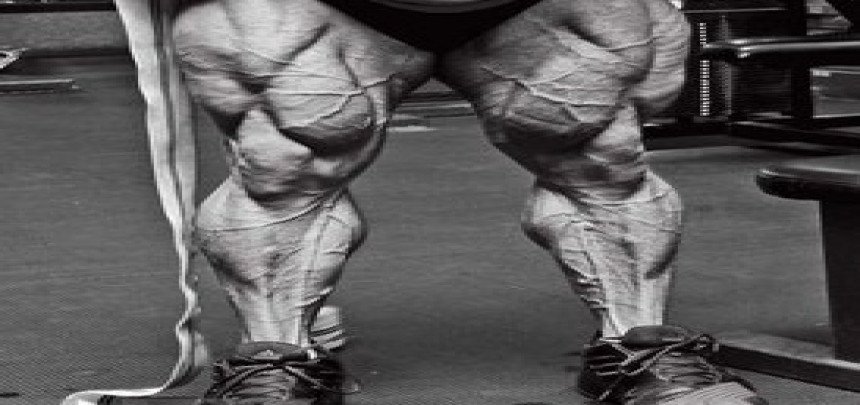
Training, Arnold once said: “Leg workouts simply have to be brutal to be effective. Normal workouts are hard enough, but if thighs happen to be a weak point in your physique, you have to be prepared to push yourself even more. If you’re doing it right, expect to get quite nauseated. From famous bodybuilders to famous strength coaches, there’s one permeating truth when it comes to leg training: it’s gonna suck. And perhaps that’s why big muscular legs in your gym are as rare as small breasts in Los Angeles since the 80’s. BUT if you’ve got the “uevos”, we’ve got the methods to change that. Here are some of the most effective quad-building exercises and routines ever discovered. The King of -quads- squats Well, powerlifters sure know a whole lot about squatting. And their knowledge has carried over into sports performance training and bodybuilding. Yet that’s a double-edged sword, because powerlifters are all about maximal efforts, wide stances, a shortened range of motion, and low bar positions. Great for moving a mountain of plates, but definitely not that great for targeting quadriceps development. The “quad squat” is a whole different beast compared to the powerlifting squat. Ready? Brace yourself… it’s a front squat. Yeah, the bar is uncomfortable. Boo hoo. Get over it! The front squat position allows you to keep the torso as upright as possible, and that’s crucial for zeroing in on the quads. It also allows most lifters to more easily squat deeply. Use a narrow stance. This shifts tension to the quadriceps and off the glutes and hamstrings. There’s no complete lock-out. Squat up until you’re 2-3 inches away from fully extending the legs. Again, this is all about targeted tension. And it burns like Hell. Because of all of the above, yes, you’re going to have to use a lighter weight. So set the ego aside and remember this is about hypertrophy, not breaking a 1RM to impress the Bros. Many experts believe that the quads require more time under tension (TUT) and higher reps to grow anyway. Elevate the heels on a couple of weight plates or, even better,a wedged board. This allows greater range of motion and a deeper squat if that’s an issue for you, plus it encourages you to push through your toes which gives you MUCH more quad activation. Try it, you’ll find out what I’m talking about. In other words: Front squat, narrow stance, no lock-out, lighter weight, heels elevated ( comfortably). A due note: There’s a psychological component here as well. This quad squat is perhaps the most ego-crushing lift in existence. Everything about it amounts to the lifter having to lighten the load considerably compared to a powerlifting squat. Some people just can’t handle that… and their big asses paired with underdeveloped quads reflect it. On chicks this looks sweet. Don’t be that guy. Thank you. Leg Press like this? Seriously? Sports performance coaches often sh*t on the leg press because it doesn’t transfer well to sport, plus squats are more effective anyway at building overall strength, something that’s obviously important to coaches who work mainly with performance athletes. But what about the leg press for bodybuilding? That’s a whole different story kids. The leg press is a great exercise for hypertrophy, especially for the quadriceps. Period. So what’s the best way to use the leg press for quad size? I’ll tell ya: medium to narrow foot position, placed low on the foot plate, and performed with high reps. High reps you said? What about “Go heavy or go home”? There’s a time and a place for that, but if your quads are only a little bigger than your calves, then it may be time to strip off some plates and go for some nauseating Time Under Tension. Sorry lazyasses. Many lifters have a high percentage of slow-twitch fibers in their quadriceps.  Quad Rises. Wut? This is the equivalent of the glute-ham raise for the quadriceps. While it seems deceptively easy at first glance, it can really burn those quads of yours when performed properly, leaving you limping for quite some time… I bet you’re just dying to try it, right? Here’s how to do it: Add a “finisher” A finisher is any movement you add to the end of your regular training session to “finish off” the muscles and further stimulate hypertrophy. It’s totally old-school and masochistic… and totally effective for quad growth. You just perform your regular heavy compound movements first, then finish off with this torture method: The ski squat. You’ll think it’s easy at first, but you’ll think again by the end of it, guaranteed. Place your feet shoulder-width apart, about two feet out from the wall, and lean your back against the wall. Bend your knees to a partial-squat position. This is position one. After 10 seconds, lower down to position two, about two inches lower. After 10 more seconds, lower another two inches down to position three. You should be about thigh parallel by now. Use another two lower positions, with position five being about as far as you can bend at the knees. Most people have legs like Jell-O by this point. If you’re not: Extend each static position to 20 seconds, or come back up after you work your way down the wall. Can you smell it? That’s PAIN seeping from your pores son. Leg training involves a mental effort almost as much as a physical one. This means forcing yourself to break down any inhibition or barrier.Knowing the exercises and routines is one thing. Putting them to work, with intense mental focus and eyeball-popping effort, is quite another. Are you ready? You better be!

Huge quads: go hard or go…grow? Read More »

You eat like a dog

Nutrition, Eat all the food you want, but if your body can’t assimilate your protein, carbs, or fats, it doesn’t do you any good. When I have a client who can’t gain muscle, I don’t automatically increase his protein or change his training program. I watch him chew. It’s insane how many guys will eat a huge steak and only take five or six bites before swallowing it. They eat like my dog. And they’ve completely screwed their chances of getting all the high-quality protein and fat from the steak. Failure to fully digest your meals can lead to poor muscle growth, lack of energy, and even bouts of depression as it can also mess up your microbiota. You may be eating all the nutrients your body needs, but if your body doesn’t have the capability to digest them, whether it’s a lack of HCL (hydrocholoric acid) production or other causes, you won’t get the benefits eating the nutrients in the first place. So it’s not just what you eat. It’s how you eat, too. There are two phases to digestion: mechanical (chewing) and chemical (the actual breakdown of nutrients in your body). But let’s back up a minute. Digestion actually starts when you SEE  food. Imagine you have an orange sitting in front of you. See how juicy it is? Smell the citrus. If you really think about it, you’ll automatically start salivating. Why is that important? Saliva contains an enzyme called amylase. When you mix the food with your saliva, you actually start breaking down the carbohydrates right there before it even gets to your stomach. Not only should you chew your food, you should also eat your protein shakes as well. If you’re a typical meathead you’ll just slam the protein shake. But you gotta treat it like fine wine. Swish it around in your mouth. Intertwine it with your saliva and start breaking it down. So we’re chewing our food and our protein shakes (and getting weird stares from people). Now how do we know when we’ve chewed enough? Think of this way: let’s say you put a block of ice in the sun. It takes a long time to melt, right? Now say you put a handful of ice chips in the sun. They’ll melt a lot faster. Your body works the same way. If you chew enough times, say 15 to 20 times per bite, then what you’ll have is essentially liquid. It’s much easier for your stomach to break down. And here’s another tip: don’t drink water with your meals. Yes, seriously. It’s a sign you’re likely not chewing enough. You’re just drinking the water to help push the food down. Also, the water dilutes your stomach acid, which you need to break down the liquefied food that travels there. Which brings us to the chemical phase of digestion. Once the food passes through the esophagus, it goes through the lower esophageal sphincter and into the stomach. There, the presence of food stretches the stomach and signals your body to release gastrin and HCL. Now, here’s where things get a bit tricky. Gastrin is important for protein breakdown because it signals for pepsinogen to be released. But the pepsinogen can only convert to pepsin–the enzyme that breaks down protein into amino acids -IF THERE’S HCL.- And most guys don’t have remotely enough. If you don’t have enough HCL to convert pepsinogen to pepsin, then it doesn’t matter if you eat 400 grams of protein a day, because you’re hardly going to digest it. So if carbohydrate breakdown starts in the mouth with saliva, and protein assimilation starts in the stomach with HCL converting pepsinogen to pepsin, what about fats? Think of the gastrin, HCL, and food blending together like they’re in a cement mixer. This glop makes up a mixture called chyme. Once the chyme gets to the bottom of the stomach it enters the duodenum before going into the small intestine. If the chyme is acidic enough (which it probably isn’t in most cases), a hormone called secretin gets released which tells the pancreas to release enzymes into the small intestine. Now secretin also releases cholecystokinin (CCK), which triggers the gallbladder to release bile. And bile production helps you assimilate your fats. But the bile can’t be triggered if your stomach isn’t as acidic as it should be. So if you go up the chain, from the small intestine to the stomach to the mouth, you see just how important HCL is for helping you absorb all your nutrients. (And, of course, you see how important chewing is). It’s hypothesizes that more than 80 percent of people have low stomach HCL. So what should you do? If you have one or more of the symptoms above, start removing gluten and dairy from your diet for a couple of weeks to see if the symptoms lessen or go away, since both gluten and dairy can be inflammatory to the small intestine and blunt nutrient absorption. Also, if you’re used to taking acid neutralizers like Tums, stop taking them immediately. People often pop them like candy, and they neutralize HCL production. But sometimes that’s not enough and you need to pull the trump card and actually supplement with HCL. People like us who are on the bodybuilder diet aren’t the norm. We eat more calories and protein than most people, and our bodies are not really made to process that amount of food in the long term. So I believe if you’re a guy who’s eating a ton of protein, you need to take extra digestive support. If you feel like you need to pull out the big guns, order a bottle of HCL (possibly one with pepsin in it) and try the following: What exactly should you feel? Well, nothing. …Sorry? You probably won’t “feel” anything, but you’ll notice that your bloat goes down, you’ll have less gas and less constipation. What if you don’t have any of those effects after taking

You eat like a dog Read More »